
Is ‘Charlie Brown’ good, man?
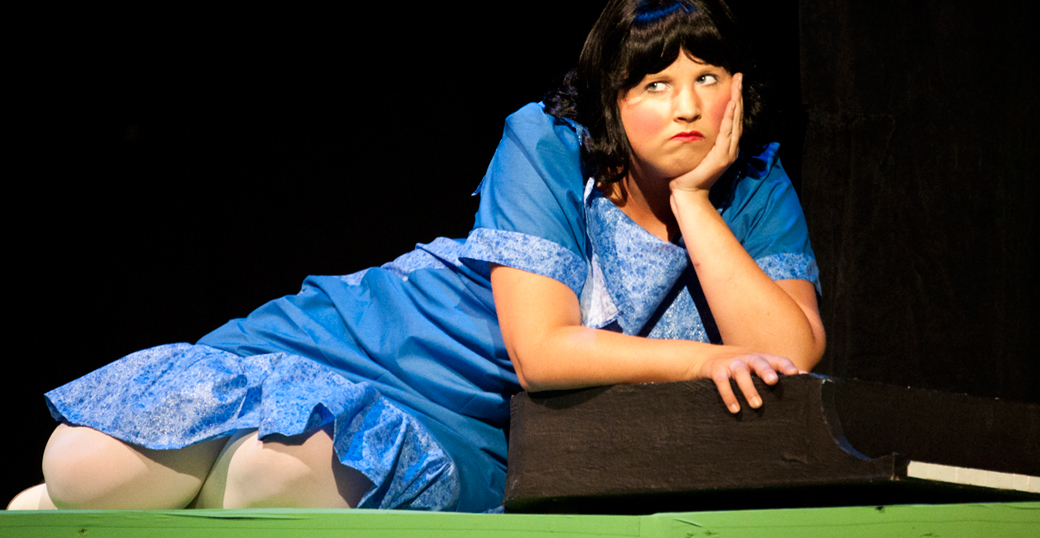
“You’re a Good Man, Charlie Brown” is a musical based on the comic strip “Peanuts,” by Charles Schulz.
The CSC production is directed by Roger Mays, professor of visual and performing arts. The cast consists of just six actors, yet the quality of their performances makes this seem like a much larger production. The musical’s strong cast, cartoon elements, and live orchestra bring Schulz’s classic characters to life in this fun, memorable production.
The musical follows Charlie Brown, played by Ammon Weser; his sister Sally, played by Lauren Morris; siblings Lucy and Linus, played by Jayma Loghry and Derek Phelps; amateur musician Schroeder, played by Willis Miller; and Charlie Brown’s dog Snoopy, played by Ashley Daniels through the drama and disappointments of their day.
This is a high energy performance, with over a dozen songs, dancing, almost constant physical activity, and exaggerated emotion. The actors maintain that level of energy throughout the performance.
The actors give convincing performances as young children through their exaggerated facial expressions and emotions. Occasionally, it becomes apparent that the actors are much older than their characters, but these instances are rare.

The actors’ comedic and musical timing contributes to the musical’s humor. In the songs “Beethoven Day,” “The Book Report,” and “Glee Club Rehearsal,” the characters talk and sing over each other. The actors accomplish this in a way that is funny yet still understandable.
The actors portray the characters in a way that made their worries and disappointments seem as important as any issue that an adult might face. The musical doesn’t trivialize Charlie Brown’s depression over losing a baseball game or Linus’ separation anxiety from his blanket, which allows audience members of any age to relate and sympathize with them.
The characters also have an adult perspective of their situations even as children, which is seen in their mature dialogue. These aspects of the musical make it as enjoyable for adults as it is for children.
The musical has many elements of a cartoon, which tie it back to the original comic strip. Because the musical is based on a comic, there is no traditional plot. Instead, the plot consists of short episodes, similar to individual comic strips. The actors transition smoothly between these short scenes, so the musical doesn’t feel choppy. The sets and props are bright, oversized, and asymmetrical, which makes the set feel like a comic and presents everything from a child’s perspective. The costumes and wigs are bright and also have a cartoon quality.
Backdrops and images from the comic strip were projected on a screen above the stage, which set the context for different scenes. However, in the song “Happiness,” random images that weren’t from the comic were projected like a slide show. This was distracting and drew attention away from the actors.
The orchestra, directed by Hannah Sanders, consists of seven musicians who contribute greatly to the quality of the musical. The orchestra also provides sound effects, such as the Beethoven music that Schroeder plays on his piano.
Audience members who like the “Peanuts” cartoon will enjoy seeing the classic characters brought to life in this production.