State urges respect for public lands
The fall season is a great time to get outdoors and experience nature through camping, hiking, or hunting. As a number of hunting seasons approach, Chadron’s branch of the Nebraska Forest Services reminds hunters to enjoy themselves, but respect the privileges they enjoy at the same time.
Two primary issues surfaced from an afternoon travelling around the area surrounding Chadron with representatives from local law enforcement and the Department of Agriculture’s Forest Service – respecting the land, and employing safe practices during firearm use.
“Shooting on public lands is an allowable exercise, but at the same time, it is a big issue in terms of safety,” Cyd Janssen, public affairs for the Forest Service, said.
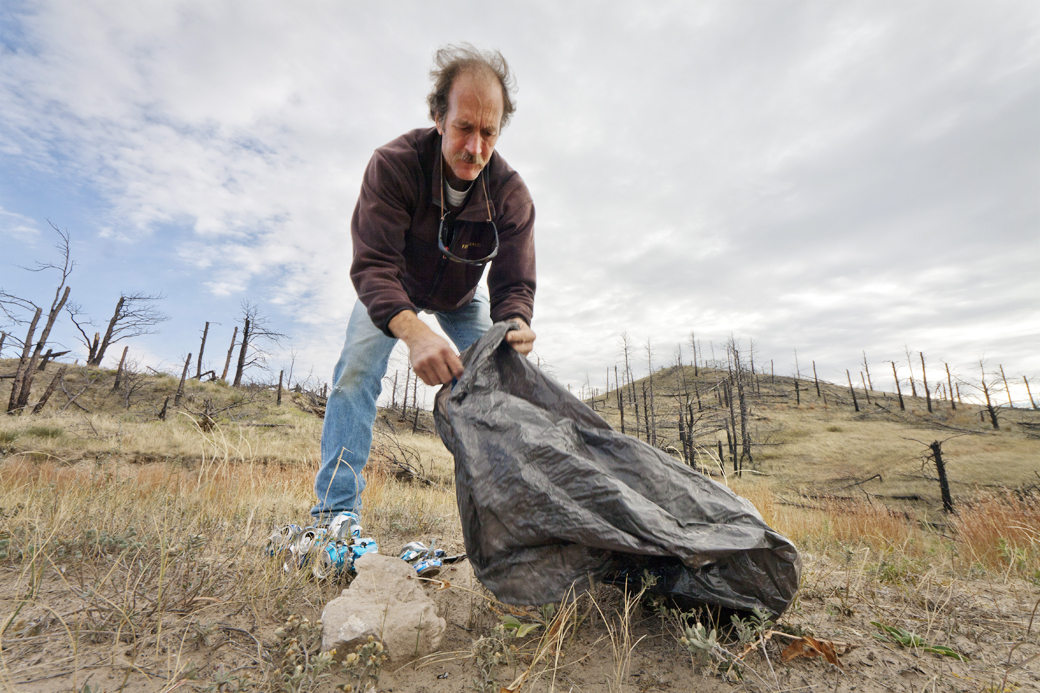
“If they want to go out and shoot, that’s fine, but they have to pick up their trash,” Janssen said.
Chadron’s branch of the Forest Service manages roughly 50 thousand acres in the Pine Ridge area, divided up into two main geographic areas.
The two primary uses of the land are tourists visiting for the scenic value and hunters, said Dave Simons, law enforcement officer with the Chadron branch of the Forest Service.
Mike Watts, recreation specialist with the Forest Service, said that people use all sorts of messy and potentially hazardous objects as subjects for target practice. According to Watts, a majority of the items used are not biodegradable.
Watts continued by saying “We have had a lot of close calls, but fortunately, not one has gotten shot yet,” about the often-unsafe backdrops that people use when target practicing. Contrary to popular belief, trees are not good backstops, Watts said.
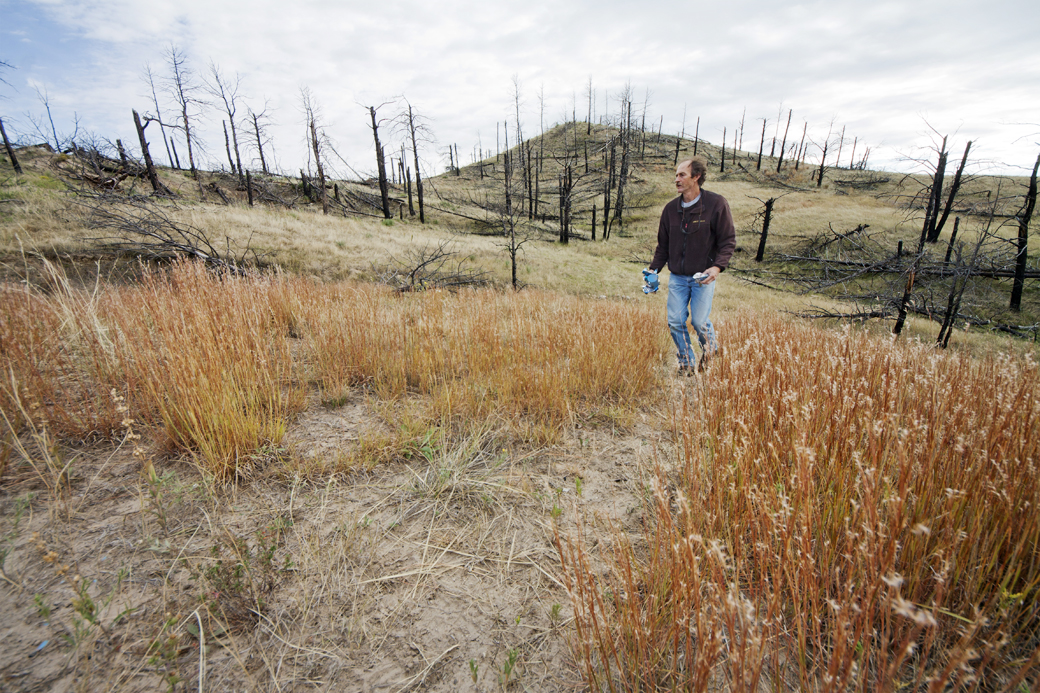
“Before the fires, the trees got shot up so much than when a windstorm came, it blew them over. We try to discourage people from using green trees as backstops,” Watts said.
Glenn Price, local Chadron resident who is a permit-holder of approximately 1,000 acres of public land, has had frequent close encounters with firearm-related injuries, and urges individuals utilizing public lands to “think before acting.”
Even though no one has been accidently shot as a result of stray bullets shot during target practice, Price asserts that the danger posed by careless target practice is real.
“Something will be done as soon as someone is shot,” Price said. He recounted that bullets have flown over his house on multiple occasions, and that at one point, a bullet became lodged in the metal of a windmill adjacent to his barn.
Price reminded firearm-users that bullets can skip off the ground in winter when the ground is frozen, posing a definite safety risk.
One of the law enforcement officers, who preferred to remain anonymous, encouraged individuals to keep abreast of current regulations and continue educating themselves on proper safety.
“Regulations have changed. Things you used to do might now get you a citation,” the officer said.
Even though issuing citations is a part of Simons’ routine job, he asserted that he would rather influence a positive change in someone’s behavior rather than have to ticket them.
“If I can affect behavior change; that’s more important than trying to cite or fine people. The money [from tickets] is not doing us much good as it goes into the general fund of the Forest Service [and therefore may not affect local programs in Nebraska],” Simons said.
Further, he continued, “We [enforcement officers] have to live here, and we would rather effect change from the ground-up.”