
‘Ornery Times’ take the road to college
(This is the third in a four-part series on the life and “Ornery Times” of Chadron resident Don Holst.)
Don Holst, 81, of Chadron, was born during the Great Depression and grew up during World War II.
Of his birth and upbringing, Holst said, “I was conceived the day the stock market fell. So I was off to a good start. When I got a little older, we had a world war. It was ornery times.”
After four idyllic years of high school football and track—1944 to 1948—Holst knew he wanted to go to college.
For the source of his inspiration to attend college, Holst looked back to 1942, when he was 12 years old and met a group of college students from Kansas State University.
Many kids in Marysville, Kans., had heard a special train was coming through town to bring people from Kansas State University in Manhattan, Kans., up to a Husker football game in Lincoln.
The train was made up of three baggage cars lined with straw bales for seats, and packed full of students from K-State.
Holst recalls that although Nebraska was a dry state at the time, the college kids had plenty of hooch and there was a lot of singing and laughing going on.
Laughing himself, Holst said, “After that trip, I decided college was for me.”
Although he wanted to go to college, Holst couldn’t afford to do so straight out of high school. He got a job with Union Pacific Railroad near Rock River, Wyo.
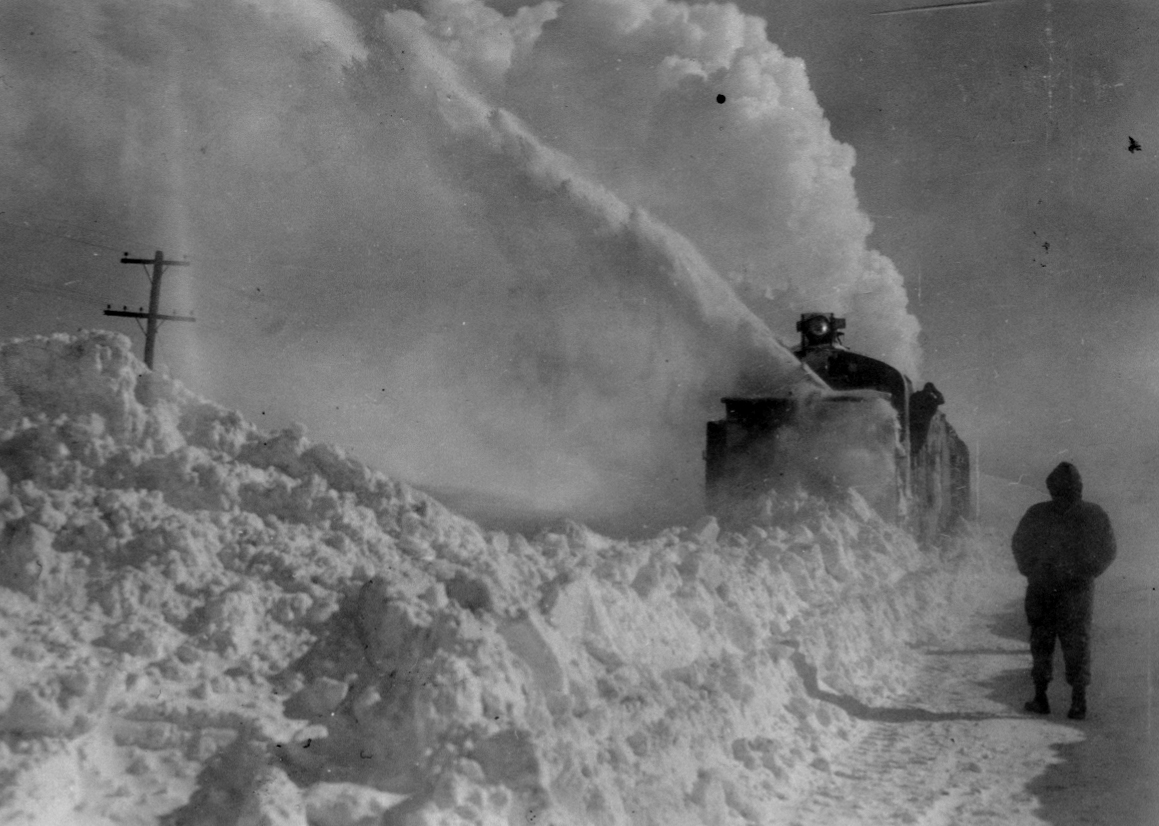
The work was not itself overly difficult–sweeping out box cars could take a lot out of a person though, after a full day inhaling the dust from feed and grain. However, the weather was a different story. The blizzard of 1949 wreaked havoc all over the western United States.
Holst remembers snow drifts 25 to 30 feet high, and the crew hands could walk over the power lines that ran by the railroad tracks. People in Rock River had to learn to recognize their homes by what their chimneys looked like. They were snowbound for 26 days.
Despite feeling at times like the job was a waste of time, Holst said he learned more working for the railroad than at other times, and it paid enough to get going with college.
Holst attended Emporia State University in Emporia, Kans. He lettered all four years in football and track, and was married his senior year, with three months left to graduate.
Holst enlisted in the U.S. Marine Corps. in 1953, was commissioned a second lieutenant, and stationed at Quantico, Va.
Later at the Naval Amphibious Base, Little Creek, near Virginia Beach, where he studied embarkation logistics to supply units out of Camp Lejeune, N.C.
Holst said these were hard times on his wife Beverly and later on his children Chris and LeAnn. While stationed in Vieques, Puerto Rico, Holst was unable to be present at either child’s birth.
However, by 1956, Holst and family were together in Columbia, Mo., where he was working toward a Masters of Education at the University of Missouri.
The next several years moved fairly quickly for Holst. He moved through a series of graduate teaching assistantships in Missouri and northern Wisconsin.
In August of 1964 Holst was appointed Major of the Reserve of the United States Marine Corps.
On Sept. 10, 1965 he arrived in Chadron, to 10 inches of snow on the ground and a job at Chadron State College as physical education teacher, head track coach, and assistant football coach.
While Holst was track coach, his athletes broke 20 of 26 school records.
Lafayette Robinson still tops the list of Outdoor Track Records in the 2011 CSC Track Guide for the 100 meter dash at 10.1 seconds in 1968.
Of Robinson’s more-than 40 year record, Holst said, “Near as I could find, Jesse Owens best time was 10.2 seconds.” Holst and his athletes got to meet Owens when he visited Chadron in 1968.
Benny Francis held the school record for discus at 174-5 in 1967 only broken in 1998 by Dough Lytle with a throw of 175-5.
Jack Needham, held record for long jump with 24 feet in 1968—at the time, the second longest jump in collegiate history. That record went unbroken until Josiah Smith jumped 24-2 in 2000.
Holst attributes his athletes great success to something of an unorthodox coaching philosophy. He worked hard with his athletes, but told them, “Practice when you want to.”
To many critics’ surprise, this method worked. Holst’s athletes worked themselves just as hard, if not harder than they might have in a required practice regiment.
Next week, The Eagle will present the finale to a series of stories about Holst’s life and achievements—including more on his time at CSC and his more recent exploits.
