
Pipeline rerouted, taxpayers to pay for survey
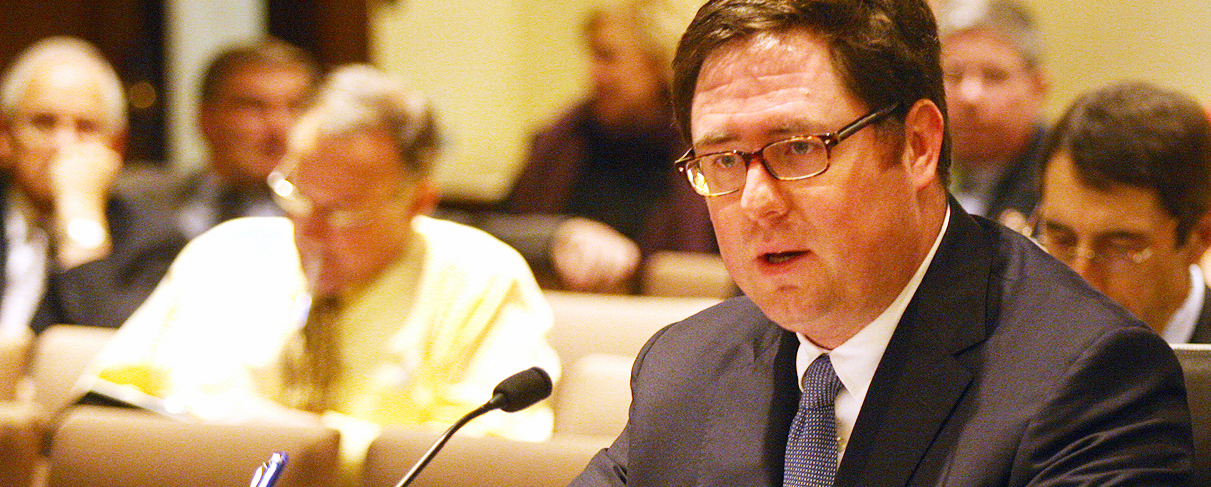
TransCanada agreed Monday to alter the Keystone XL Pipeline’s route to avoid the Sand Hills region. The originally proposed route would stretch from Canada to Texas over Nebraska and the Ogallala Aquifer.
The announcement was conveyed by Speaker of the Nebraska Legislature Mike Flood, of Norfolk, who delivered the news Monday in a special session of the Nebraska Legislature.
“They [TransCanada] have agreed to voluntarily move the route out of the Sandhills,” Flood said from the floor of the Nebraska Legislature according to the official news service of the legislature.
Gov. Dave Heineman called the legislature’s special session on Oct. 25, citing a need to enact legislation relating to oil pipelines.
Legal counsel for the Nebraska State Speaker, Matt Boever, said in a telephone interview Tuesday that he didn’t have a bird’s-eye view of the situation to categorize which force had the greatest influence. However, he cited citizens’ involvement, the special session, the Nebraska secretary of state, and a group of state and federal senators as the key components for the change of route.
Flood testified before the Nebraska Natural Resources Committee Tuesday afternoon in support of a committee amendment (AM37) that would place siting authority with the Public Service Commission rather than the governor.
“This is a win-win compromise,” Flood said in a telephone interview Tuesday about the rerouting of the pipeline.
In response to some Nebraskans expressing concerns over TransCanada paying for the environmental impact statement, Flood’s amendment calls for the state portion of EIS to be administered at taxpayer expense.
Flood prefaced his rationale by saying, “We want to be judicious with taxpayer money.”
He continued, “This is a Nebraska issue, impacting our water, land, and people. If it is such a significant issue, it [the survey] should be funded by Nebraskans so as to ensure that it is free from bias or conflicts of interest.”
Normally, a fee for a survey or analysis is billed to the applicant; however, in this case, if approved, AM37 mandates that taxpayers, rather than the applicant, pay for the survey.
The fiscal note that was submitted along with the amendment specifically relating to the TransCanada EIS dictated that no more than $2 million be spent on the survey.
Sen. Tony Folton, of Lincoln, said Wednesday morning during day 11 of the special session of the 102nd Legislature that he thought $2 million was a bit high, but that the cost was worth the expense in order to protect the natural resources of Nebraska
Amendment AM37, according to the Legislature Daily Journal, “was adopted with 45 ayes, zero nays, two present and not voting, and two excused and not voting.”