
Art ninjas: the minds behind an exhibit
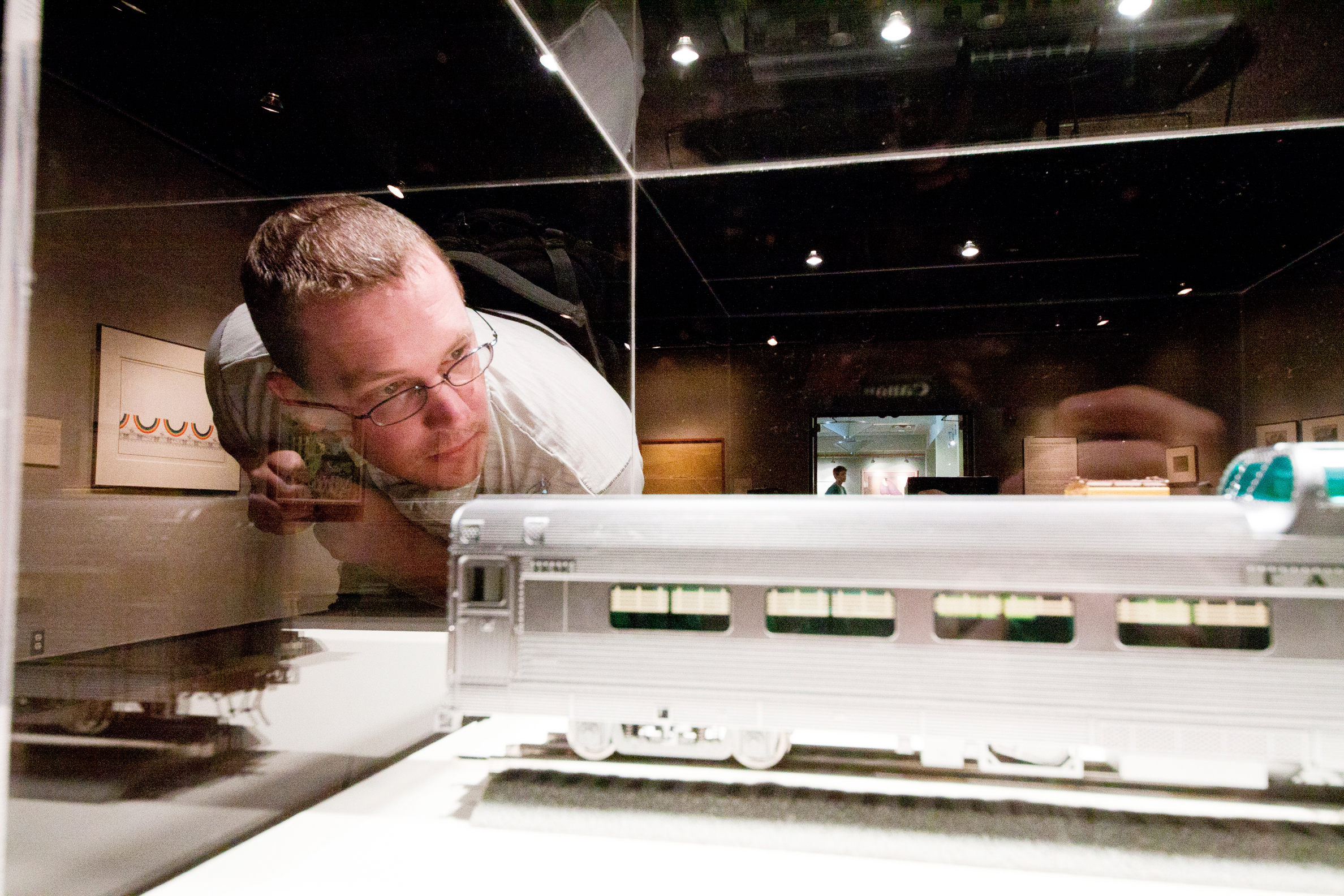
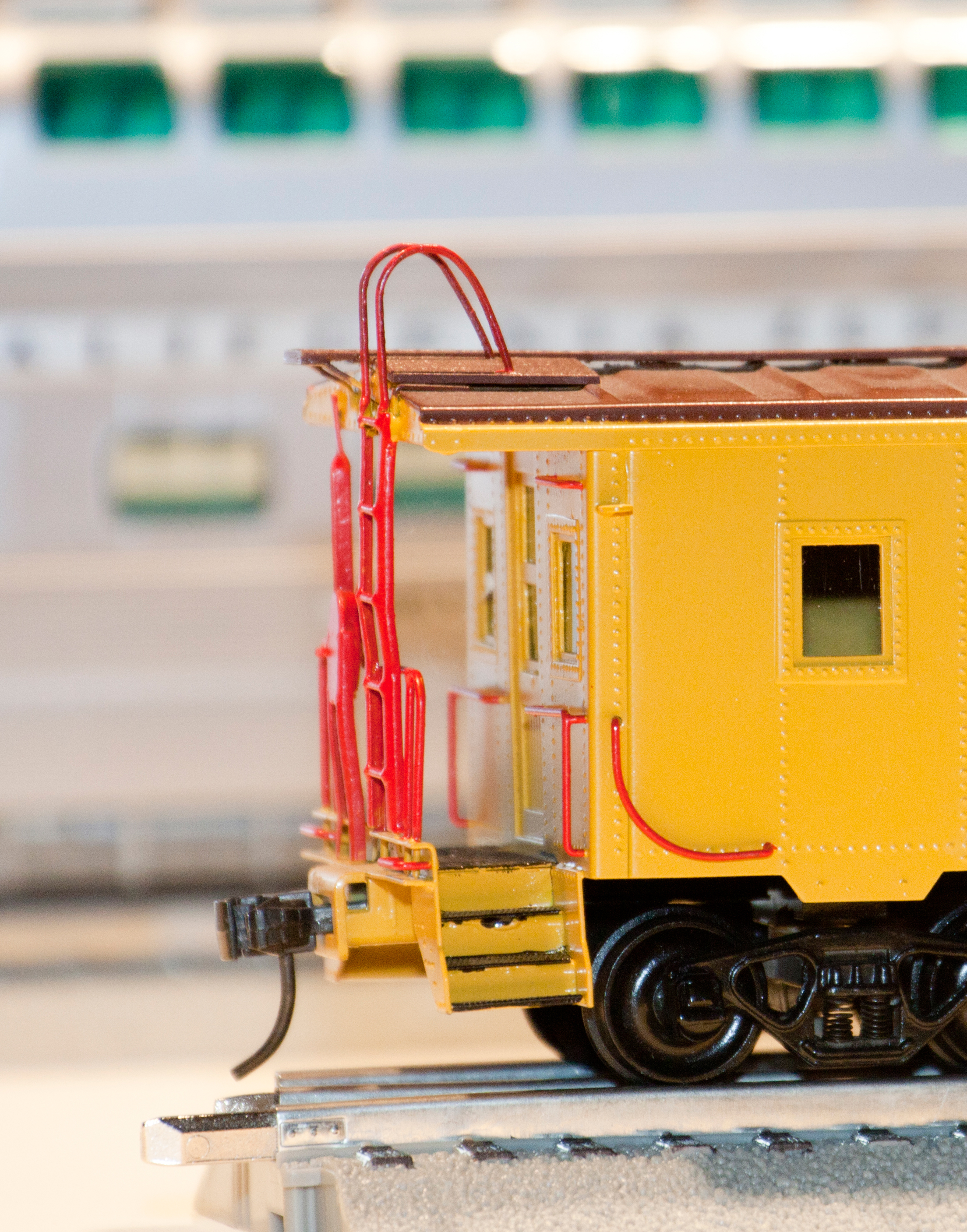
The new exhibit currently showing in Memorial Hall’s main gallery is a train-themed art show on loan from UNL’s Sheldon Museum and will be showing from now until Sept. 26. The show explores the intersection between art and history, probing the parallel tracks of Nebraska’s artistic and railroading narrative.
The real action, however, took place before the doors ever opened.
Measuring tape drawn, Dave Harvey inserts tiny nails into the felt-covered wall, tapping with his hammer like a sommelier opening his prized cask. Harvey is a working artist and Sheldon exhibit technician, which he defines as “I hang stuff up, I take it down, I hang something else up.”
Harvey’s deadpan humor bounces off his partner Greg Nosan, director of education and publications at UNL, who qualifies this. “We decide what goes where on the walls,” he says, examining an arrangement of frames. But it’s more than that. The pair are responsible for the artwork’s well-being as the pieces tour the nine Nebraska locations. If a piece is damaged due to over-exposure, Harvey and Nosan are responsible.
“You have to ask how’s the security, how’s the acclimatization?” Nosan said, speaking to a class of four students, seated on the gallery floor. They are Sarah Polak’s exhibit design class, and while Harvey and Nosan hang the Sheldon show, they show them the ropes… and the frames… and the nails. Every detail of an exhibit, the lighting, the name cards, and the pieces’ hang height, are decided by Harvey and Nosan.
“Sometimes it’s just seeing the space and trial and error. This exhibition will be different in the next location.” Nosan said.
Exhibit design is a science in inches and hooks, exactly formulated to pull the eye and appeal the symmetry. They aim to hang a picture’s center at 58 inches exactly, which is the average human eye level. Sometimes pieces are stacked, then the math changes. Other times, designers choose to hang the picture’s “visual center” at 58 inches, and then they must decide where that eye-drawing point lays.
“You really have a hand in the art,” Harvey said, “maybe you want to hang everything facing the wall, and have the audience imagine what they look like.”
Though not recommended, Harvey’s statement illustrates the surprising artistic sway they hold. Imagine an image composed of 30 pixels; imagine the possible mutations of that picture when the pixels are changed. Now imagine you are in charge of each pixel’s arrangement, and people will pay – or not – to see your finished product. Finally, none of the pixels are made by the same people, and their cohesion rests on your shoulders. This is Nosan and Harvey’s reality, and as Nosan said, “hanging the artwork is also an artistic expression.”
That’s why the pair drove out from Lincoln for one night of hanging. They arrived at 3 p.m. and, after some finishing touches in the morning, departed the next day.
“They’re art ninjas,” Polak said.
The pair also set up a traveling scrapbook of gallery viewers’ responses. Whether it’s a phrase, poem, or picture, every reaction will travel to the next location, amassing an artistic show in itself.
And thus the Sheldon’s duo worked into the night. If you visit the touring show, you’ll see those images thanks to Nosan and Harvey’s work. Hopefully you’ll also see their hand in the big picture of art, how we interpret it, and how we can affect it in return. Those pieces weren’t placed there by accident.