Two Stories, Two Styles
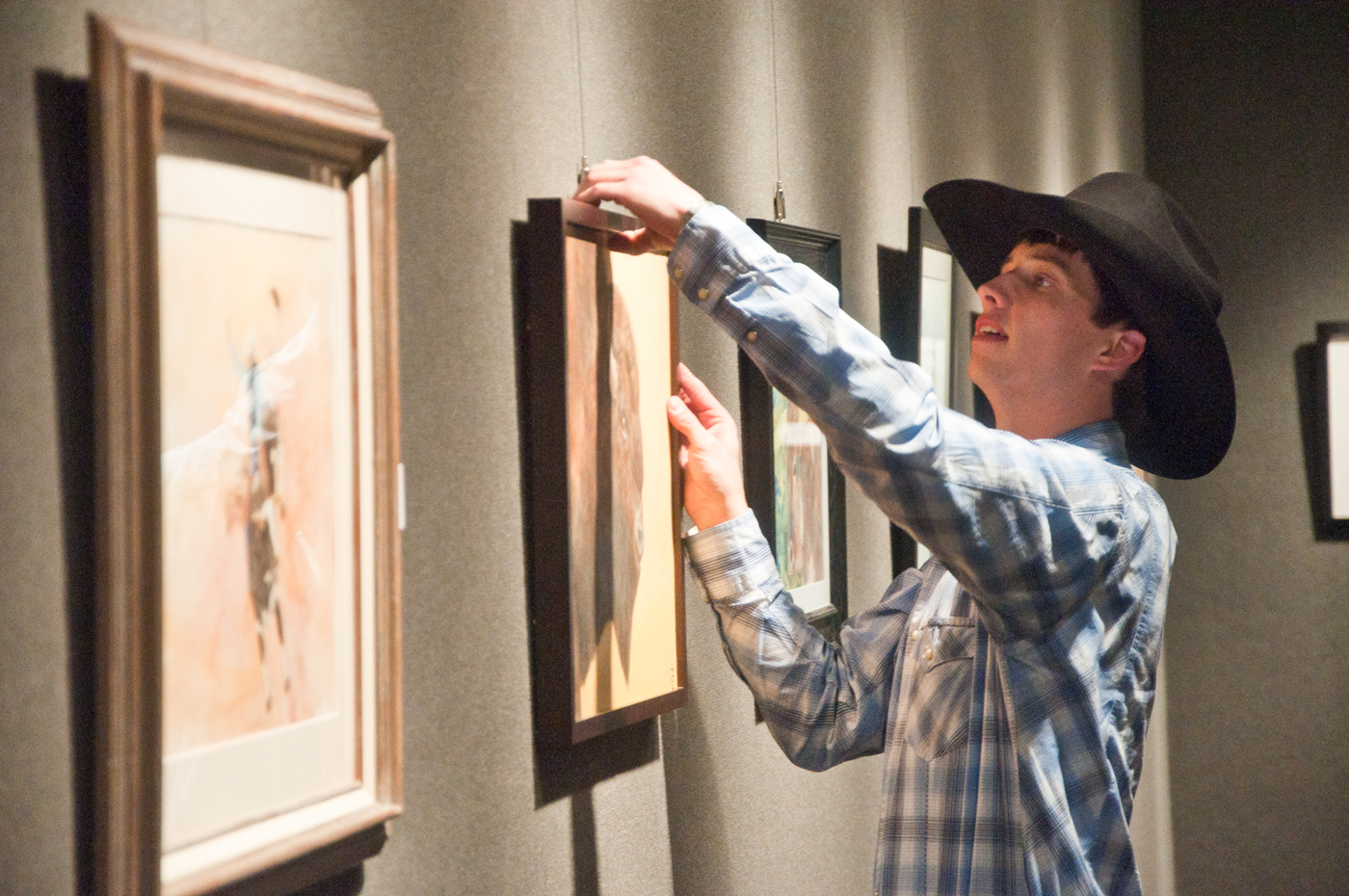
In astronomy, there is a phenomenon called binary stars, where two stars orbit each other and appear like one. The human eye doesn’t have enough angular resolution to differentiate the two stars, so their glows combine into one light. Two of the art department’s stars, Jory Zurcher of Mitchell and Megan Gibbens of Sargent, are displaying their accumulative works in Memorial Hall’s main gallery from now until Dec. 7.
Their works are the product of CSC’s art field endorsement program, since both are earning their Bachelor of Science in Eduction degrees, focusing on teaching art. Despite the show’s title, “Diverge,” the pairs’ works harmonize together, and unite the gallery under canvases of oil and watercolor.
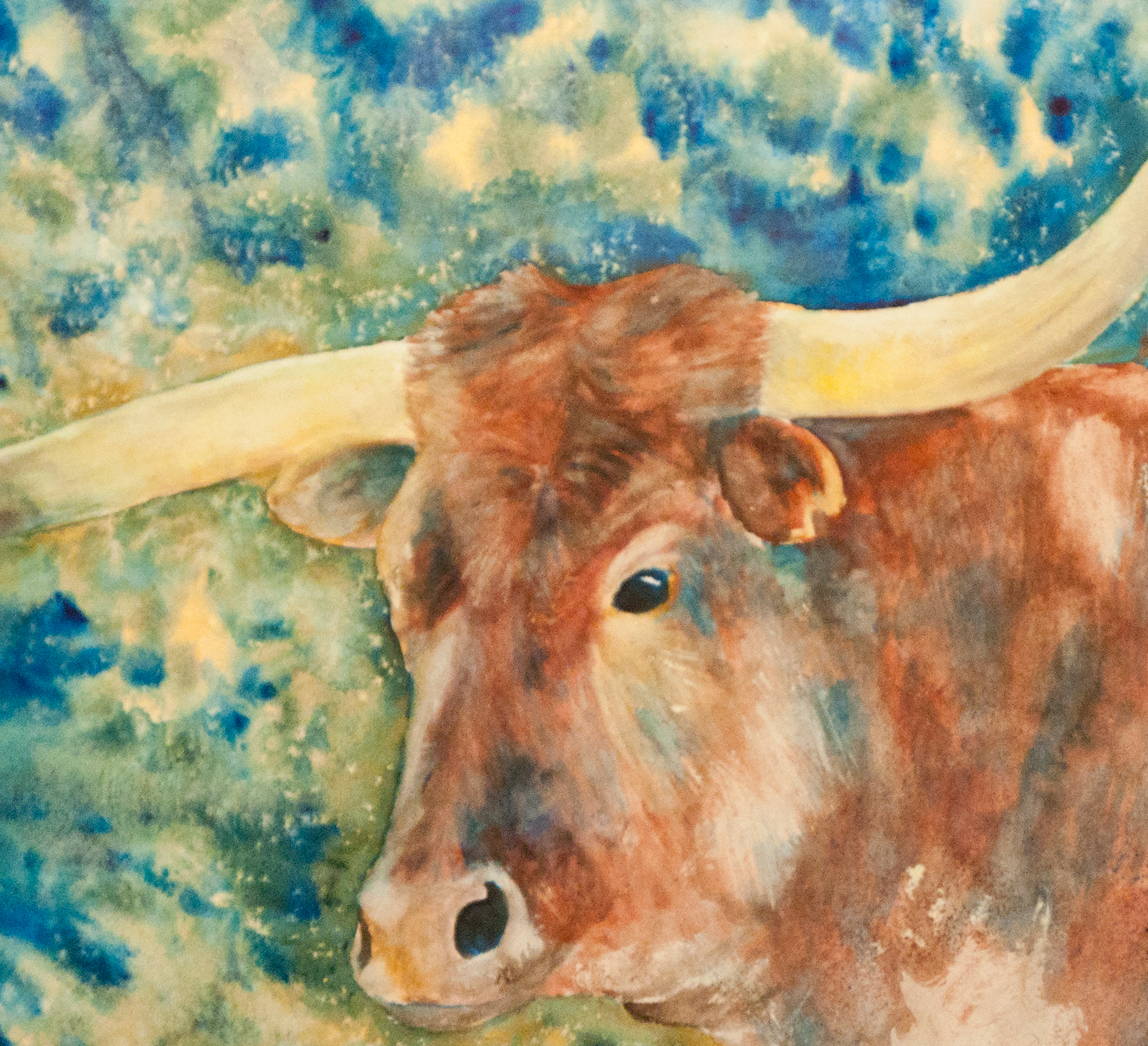
The gallery is divided, with Zurcher’s works on one side and Gibbens on the other. Instead of opposing, however, the binary artists represent similar mediums and subject matter. On the right hangs Zurcher’s array of cowboy-inspired paintings, intermingled with bronc and bull sketches. Zurcher’s oils, like “The Lone One,” depicting a solitary bison, are done in muted pastel tones, and reinforce his show’s appreciation for plains heritage. In his artist’s statement, Zurcher reflects on his cowboy roots. His childhood transits to rodeos, stand out in Zurcher’s artistic history, and the rodeos clearly influenced his work. The title of one of his water colored horses, “Tools of the Trade”, reflects a more pragmatic view of horses, as a literal farm implement. But Zurcher’s light, colorful style fills in any missing romanticism that the title lacked, and reflects the artist’s appreciation for the animal. His second equestrian watercolor, “Owayyekke Wasse,” takes its name from the Lakota saying “everything is good for the eyes”. The piece, like its title, reflects Native American inspiration, and has the same soft portrayal of a glassy-eyed horse.
Stretching onto the gallery’s back wall, three painted skulls give the show and decidedly south-western feel, and are reminiscent of O’keeffe’s New Mexican creations. The small paintings, some done in faded watercolor or thick acrylic, are situated on horned animals’ foreheads. One on a bison skull, another on a steer’s, the pictures look like the animal’s last thought, soaked through in color. Completing the mesa feel, Zurcher chose to feature a remarkable pair of chaps.

“I am reminded of how blessed I am to be doing what I love,” Zurcher wrote in his statement, and it’s obvious he loves leatherwork.
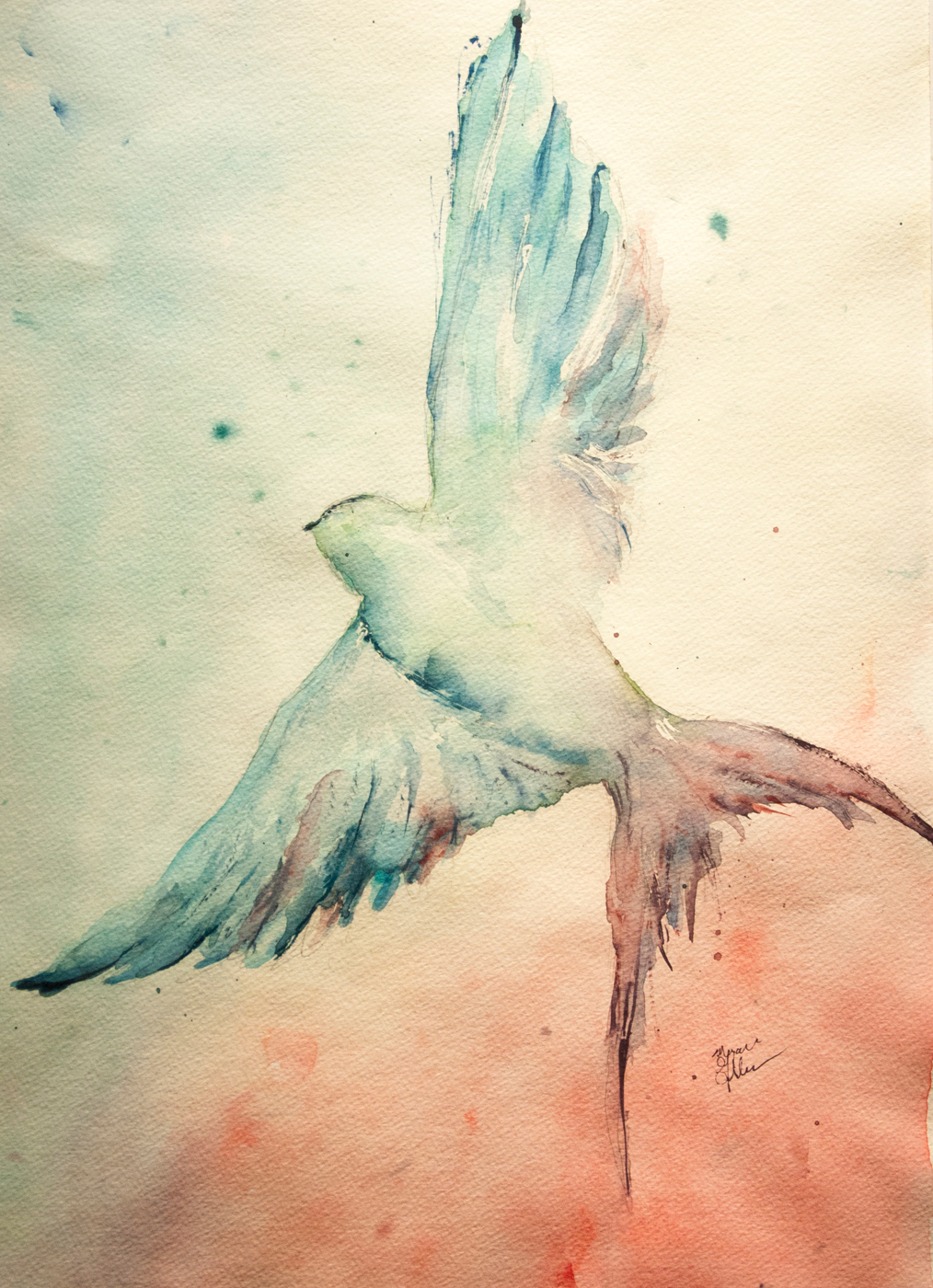
Like Zurcher’s chaps, Gibbens has her own party piece hanging on her side. A United States map, made entirely of Nebraskan license plates, hangs beside the title “United Plates of NE.” Although distinctly cool, her metalwork also reflects a transient idea which breaths through both of their displays. “United Plates” reflects how America’s bread basket has supplied the entire country with sustenance and a unique western image. Both artists deal with the Nebraskan Plains, Gibbens is the colorful centuries-old background, Zurcher, the rural man moving through. Instead of horses, Gibbens’ watercolors are delicate feathers, arranged in a simple but thought-provoking set of three. Zurcher paints with wild, bucking broncos, while Gibbens’ work is the quite, pensive wilderness, like the world after the stadium has emptied. Even her geometric stained glass reflects, literally, nature. Her mesmerizing “Sunburst” casts it’s own linear shadows on the wall, which show through the verdant pieces and make it doubly prismatic.
Both artist’s work waxes poetic about the grassland. A nostalgic feeling dominates the show – Zurcher’s rangeland paintings, especially the horse paintings, are done in warm, sunset colors, like the maternal Nebraskan sun is glowing on her old companion, the horse. Gibben’s watercolors, two in particular (“Lone Oak Farm” & “Windmill”) are painted in sepia tones, like the faded photographs of a dying way of life.
Gibbens grew up on a farm in Central Nebraska, exploring nature. Both her and Zurcher draw from their rural backgrounds to feed a talent that not only supplies their community with art, but also aims to inspire and teach young artists in their wake. Instead of diverging, Zurcher and Gibbens’ art combines to make one singular, luminous show, composed of two stars.