
CSC Student shows off the patterns of Scotland
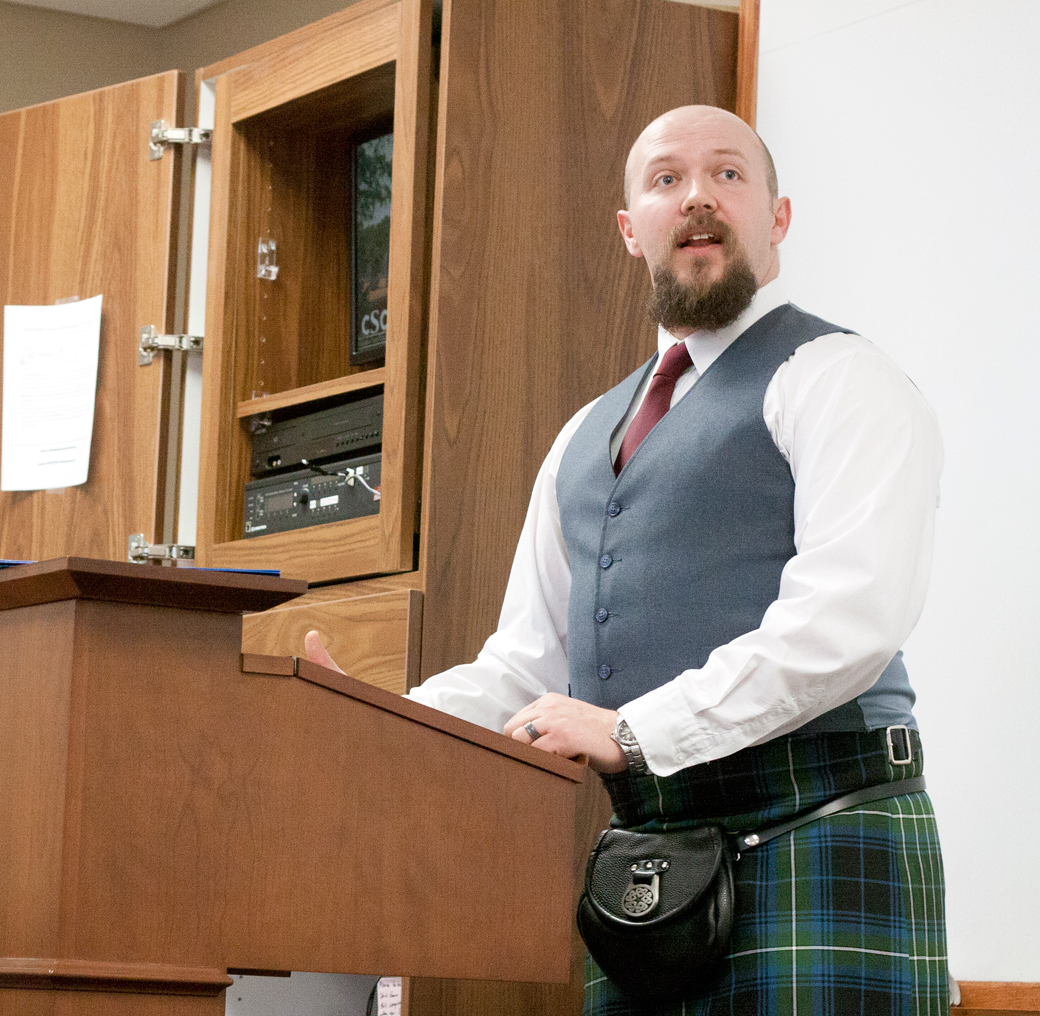
On Friday, January 25, Robert Burns fans around the world gathered to celebrate the venerable Scottish poet’s birthday. Some attended Robert Burns celebrations, where kilt-clad appreciators recited classics from the Ploughman Poet and discussed history.
Allen Maltbie, senior of Hay Springs, treated Robert Mcewen’s poetry class to one such presentation. Maltbie arrived in formal Scottish regalia, including tweed jacket, sporran, and of course, kilt. But, as Maltbie informed the class, the kilt wasn’t always a staple of Scotch culture.
During the prescription of 1746, a time of repressive English occupation, the kilt was outlawed, and the tradition fell by the wayside. The tartan icon made a comeback after King George IV visited and asked to see a pageant of Highland dress. The Scottish chieftains scrambled to create clan-specific patterns, and the wide array of plaids was born.
Today, there are kilt patterns for everything from breast cancer awareness to the Scruffy Wallace tartan, made for the “Dropkick Murphy’s” bagpiper. Maltbie showed off a kilt of the latter variety, which he sewed himself. Maltbie, a quarter Irish, a quarter Scotch, and half Welsh, owns more than eight kilts, and supports a free-choice selection of personal plaids. Although many tartans are legally registered under specific clans, their historic chieftains decided based on perusing local weavers and picking their favorites.
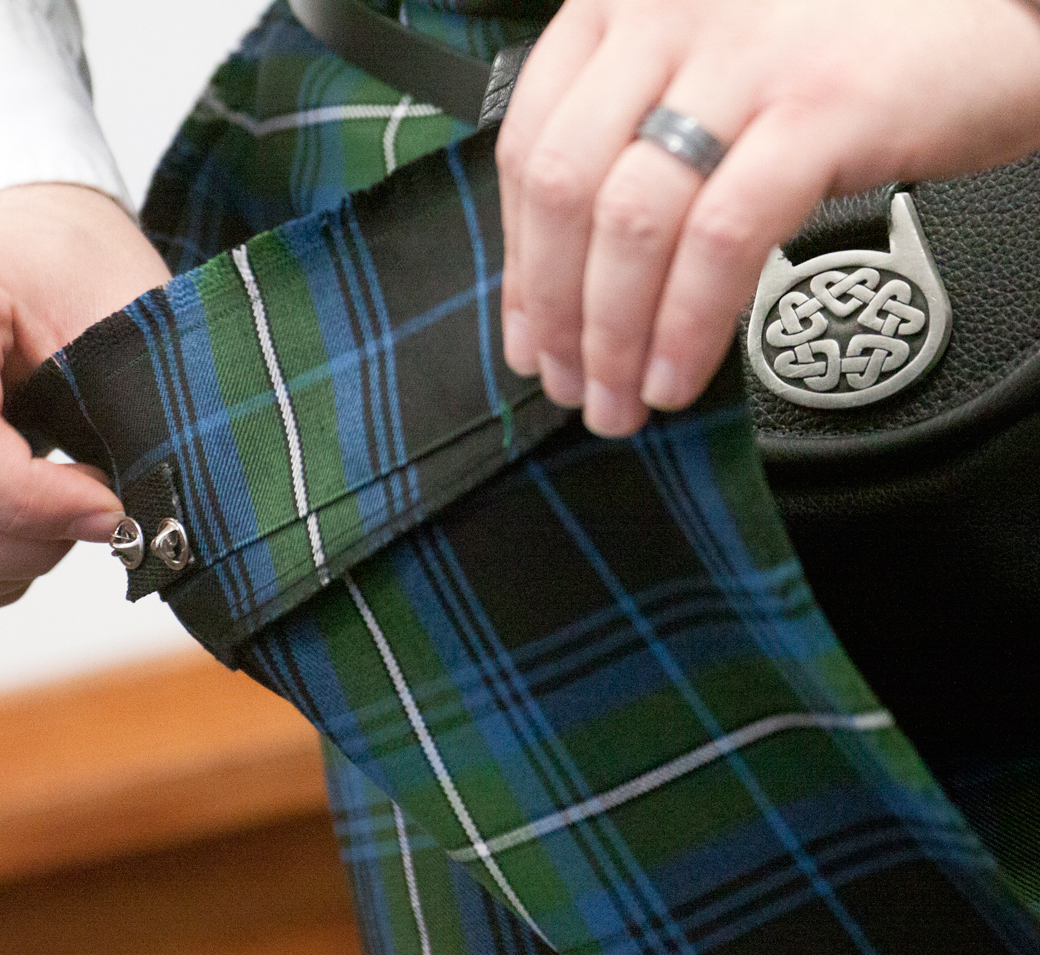
“If you really want to do the traditional Scottish thing,” Maltbie said, “just pick something you like and express it, that’s what they did.”
Ironically, Maltbie added at the conclusion of his presentation, Burns lived during prescription in Scotland. So although many of his fans will dress up in kilts to celebrate his birthday, the iconic poet would have never worn one.