

Chancellor delivers State of the System
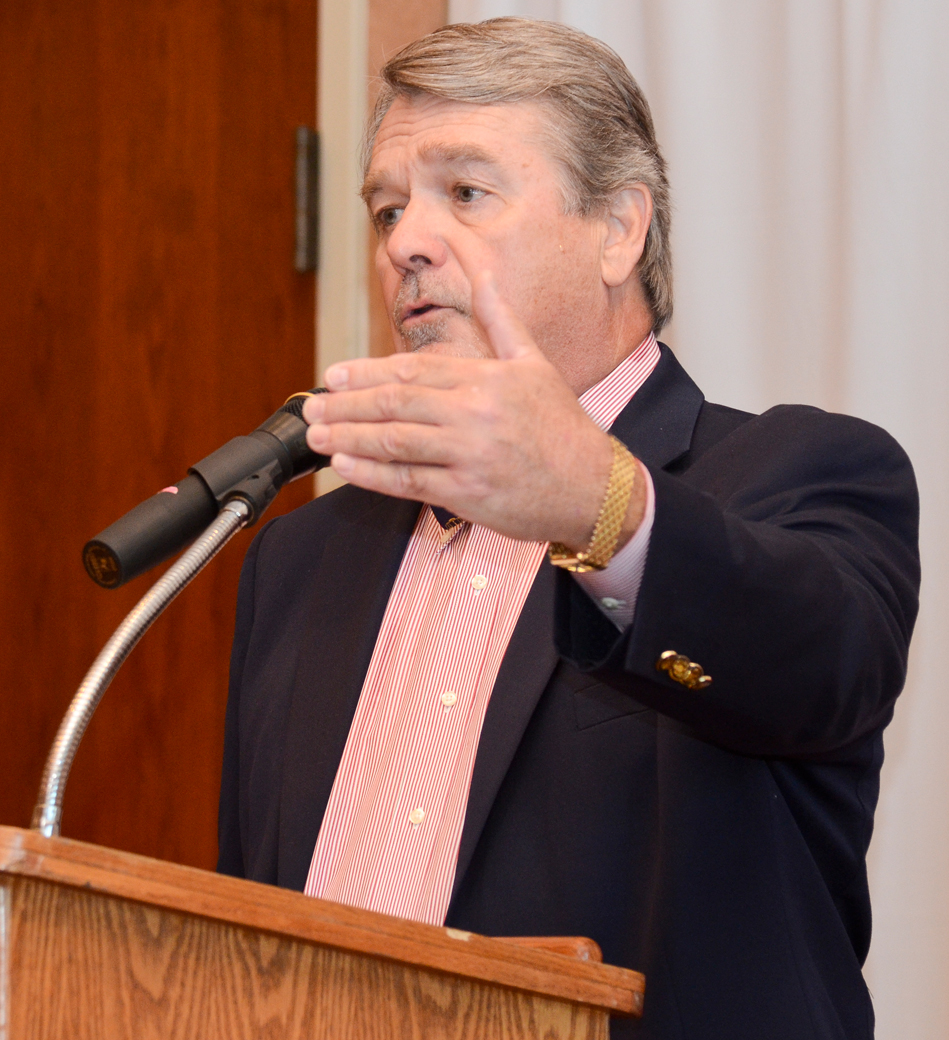
Students, faculty, trustees, and community members gathered Sept. 5 in the Student Center ballroom for Nebraska State College System Chancellor Stan Carpenter’s “State of the System Address.”
Carpenter began his address by drawing attention to the construction occurring on campus, part of $60 million in capital investments dispersed across the State College System.
Carpenter also mentioned Oren Yagil, newly hired vice chancellor for Planning and Academic Affairs. Yagil assumed the position vacated by Lois Veath Pobodnick’s retirement, and Carpenter spoke highly of Yagil’s credentials.
Carpenter then mentioned the Obama administration’s planned changes to higher education. According to Carpenter, the president’s proposed education plan will develop a college rating system that ties financial awards to the ratings.
While some think that the proposed policy will make college more affordable, Carpenter said that others view it as potentially harmful to students because it penalizes them for things that are beyond their control.
Carpenter asserted that regardless of policy changes made at the Federal level, the NSCS and the State of Nebraska would continue to make an effort to maintain affordability and accessibility to higher education.
Carpenter mentioned the two-year tuition freeze and how it ensures student’s continued access to higher education, as well as how this assists the State College System to overcome challenges, making a resilient partnership that fosters continued enrollment.
Carpenter spoke about the increased importance of rural health programs and public health professions programs offered through the NSCS. Carpenter talked about new programs like PHEAST (Public Health Early Admission Student Track) and how these programs can grow continued community partnerships. By channeling promising students into these programs, we provide them the opportunity and ability to get an education, and then return them to a rural practice. “Public health is a global issue,” Carpenter said. “If bird flu breaks out in China next week, it will be in Chadron two weeks after that.
We need people that are aware, educated, and informed on those issues, and we need them in rural Nebraska.”
Carpenter said that critics sometimes view colleges as stodgy and unchanging, but assured the audience that the NSCS will continue to push for change, and that the system could adapt.
Citing developments in Open Education Resources and the Kaleidoscope project, Carpenter said that the State College System is embracing change and dedicated to helping facilitate students changing educational needs.
“We’re not stodgy, we’re not stick in the mud, and we’re not defenders of the status quo,” Carpenter said.
Carpenter also stressed transparency, accountability, and ethical business practices as being essential to the continued operation of the Nebraska State College System.
“We are stewards of the Public Trust and stewards of the Public Treasury,” Carpenter said. Carpenter then unveiled plans for a contract with a well-known national company that will maintain a website and telephone hotline where individuals can anonymously report fraudulent and wasteful activity.
In an interview Tuesday, Carpenter said that the hotline will hopefully be finalized within a month, and that Carolyn Murphy, vice chancellor for Finance and Administration, is in charge of the project.
Carpenter spoke about increased scrutiny from accrediting organizations and the need for measurement and reporting, ensuring that there is evidence that students are receiving what is being advertised.
Carpenter stressed that dual enrollment and early entry programs were important to ensuring opportunity and success for students before they even enroll in college, and that high school students who arrive with credits are more likely to succeed. He issued a strong message pledging continued support for these programs by himself, the System Office, and three state college presidents.
In closing, Carpenter mentioned that incoming students have a dependence on technology, and that the colleges and system as a whole have to be as flexible as possible and underscored the need for faculty and administration to step up and engage the student through that medium.