
Taking a walk in someone else’s tap shoes
“Stomp, shuffle, hop, flap, heel, toe.”
Aaron Parkhurst, ensemble dancer in “TAP: The Show,” stands before me. Actually, “stands” is incorrect. He is jumping around, peppering the air with sharp sounds and deftly performing a tap move. He shouts an onomatopoeic explanation, “stomp, flap, stomp, scuff!” I look down at my own black tap shoes, which refuse to behave like his. Around me, other dance students tap through the complicated move at one-eighth his tempo. I am attending a master class session, and I’m slowly realizing that dancing through life isn’t as easy as it sounds.
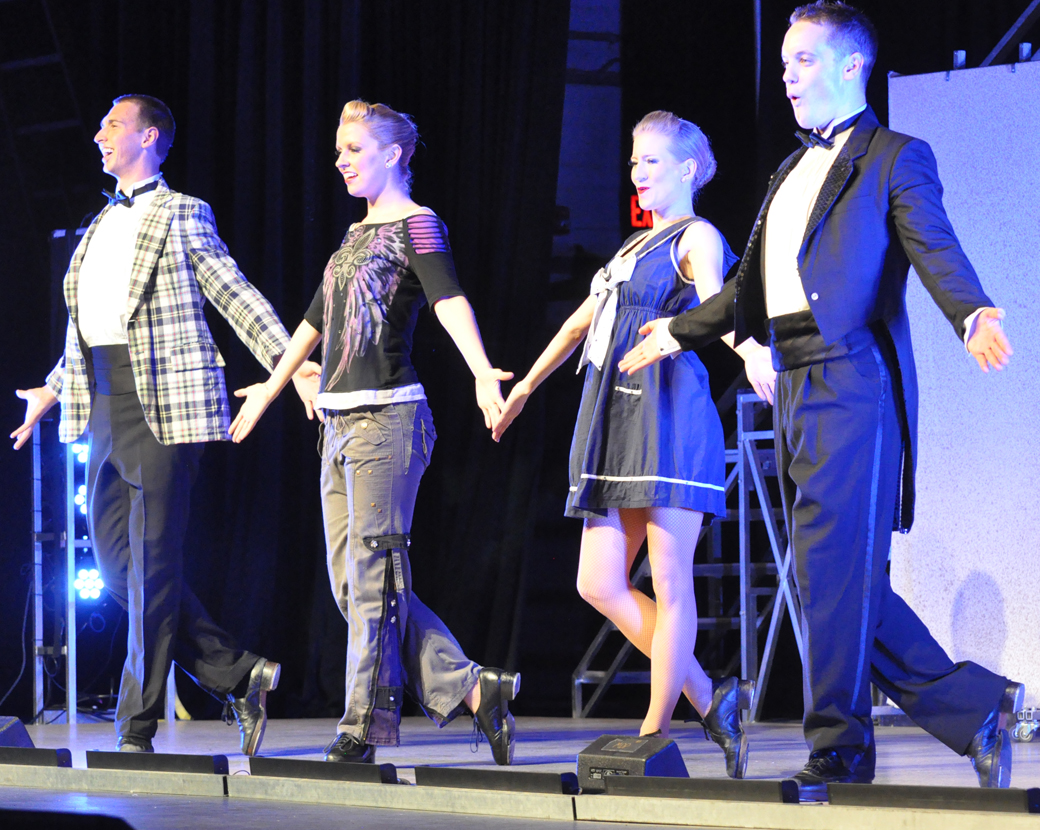
Last Thursday, “TAP: The Show” visited Chadron. Before the cast of TAP took the stage, they sat down on Memorial Hall’s main stage and met with members of CSC’s dance honor socioty, Nu Delta Alpha, and tap students from the local Consuming Fire School of Dance. I was among these eager ears, and I listened as the cast answered questions about dance, life, and marrying the two. Naturally, when the eight professional tappers offered to teach their moves, I slipped on my shoes and clattered on stage. While I climbed up the stairs, I felt quick and coordinated. After I saw Parkhurst lay out an pulse-stopping tap riff, I didn’t make that mistake again. Compared to the lithe tappers, my feet were molasses and my sounds bumbling hammers.
Their percussion was clear and precise, but their personalities impressed me even more. The cast patiently taught every tapper, some of whom were less than 10 years old. The combination they taught us comprised a small section of “Dancing in the Streets,” the high-energy finish to act one. In 30 minutes, the cast taught us stolid tappers the correct moves, but at a more novice tempo. These moves only took up a hand-full of measures. I thought I was a fast learner, until I learned the ensemble of “TAP” had to memorize three-quarters of the show in nine days. During these ten-hour crunch sessions, the cast learned about an hour and a half of fast-paced material. I silently crossed “professional dancer” off my careers list.
This demand on memory is just one of the requirements for the dancing world. One look at the sweat-drenched cast after Thursday’s rehearsal, and I could tell it wasn’t easy. Michelle Fortner, one of the female dancers, had the tendons in her knees replaced. During this recovery time, which happened during her freshman year in college, Michelle didn’t dance. She described it as “miserable,” but not because of the surgery, but because she couldn’t dance.
Whether it’s leaping around a slick stage with metal-soled shoes, or constantly searching for work, a professional dancer’s life is very unstable. They must constantly market themselves, ensuring that when one touring contract is over, there’s another waiting. Michelle’s advice: “any audition is never going to be a waste of time.” The cast agreed with her, and said that most jobs are had through networking and “getting yourself out there.” Professional tappers wear many hats, not just during costume changes. Many dancers must be their own instructor, personal trainer, and agent, in addition to dancing their feet off. This is how Danny McHugh, the male vocalist, described it: “it’s your job to audition. You get the privilege to preform.”
McHugh actually left “TAP” to preform in the Broadway cast of Rock of Ages. His replacement was Soren Wohlers, a CSC alum who toured with “TAP” until the birth of his son. Once Wohlers left, McHugh filled in his spot, happy to be back with “TAP.” Most of the cast knew each other from the original TAP show, which was a shorter performance for patrons of Hershey Park. Their camaraderie showed on stage and off, and even when they talked about the inconveniences of life on the road, they were thrilled to be touring. When, during their trip to Chadron, the on-board bus lights went out, the cast told ghost stories. Chris Large, a tall, aptly-named dancer, loves Chinese food. On the road, he and Sebastian Goldberg invented Chinese pizza, which they described in delicious, General-Taos-detail. Carissa Gravelle, the tallest female dancer, would attend culinary school if she couldn’t dance.
Along with their non-dance passions, the cast shared with me the improvised portions of the show. During every performance, the dancers have “a challenge”. Sarah Mangold, for instance, kicked out double wings, an impressive feat when you’re dressed like Shirley Temple.
Finally, I learned about every dancer’s intense passion. When I asked the cast about their greatest challenge, Maria Logan, the female vocalist, said, “It’s hard not to know if we’re going to have another show. We love it so much.”
From the “TAP” master class, I took away a few important lessons. In the preforming career, a dancer’s future is often stuck in the limbo of contracts and scheduling. A dancer should preform their piece like it’s the last time, because soon, it will be. Finally, it is a rare and special privilege to see a performer both as a person, and as an incredibly talented artist. If you ever meet a dancer, try taking a walk in their tap shoes. You might be surprised how they feel.