
‘Coming Home,’ Sandoz Center’s new exhibit provides new perspectives
Fort Robinson is known as a historic park and an attraction in the location, famous to the world. The park is located less than 30 miles away from the college, and is available to the public for anyone who wants to make the trip. For this month, though, anyone who is interested in learning about Fort Robinson and its local history, can travel across campus to the Sandoz Center.
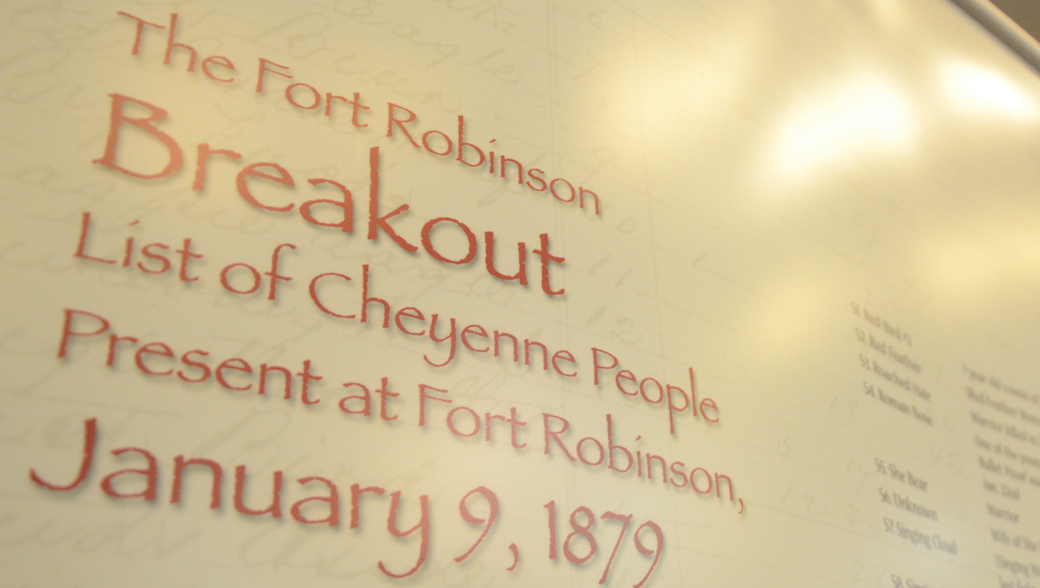
The Mari Sandoz High Plains Heritage Center is featuring a unique exhibit: “Coming Home: The Northern Cheyenne Odyssey” in celebration of the 60th anniversary Mari Sandoz’s book “Cheyenne Autumn.”
Much like Sandoz’s book, the exhibit features the famous Fort Robinson outbreak of 1879. The exhibit, however, features a unique viewpoint through the experiences and recollections of the Northern Cheyenne.
Graduate Assistant of the Sandoz Center, Jessiah Cogan, describes the exhibit as nothing you would read out of a textbook. “It’s easy to read about the breakout in a history book, but it’s usually depersonalized,” Cogan said. “This perspective is their side of the story.”
The exhibit features many personal stories of the struggle of Northern Cheyenne families. Their stories are told through a collection of posters, pictures, and other digital components.
Director Sarah Polak described one digital component as a special treat to the Sandoz Center. “The Cheyenne Language Kiosk is an opportunity we haven’t had before,” Polak said. “It’s a touch-screen computer where people can choose to view different categories of objects and then view, in written and audio format, the Cheyenne word for it. It helps give an introduction to what the Cheyenne language is like for those who haven’t heard it.”
Other digital components include audio quotes from the Northern Cheyenne and digital pictures frames showing life on the reservation after the breakout.
“My favorite part of the exhibit is the newspaper clippings found right in the center of the room,” Polak said. “After reading all the posters portraying the Northern Cheyenne perspective you get to read the military view point and see how it contrasts.”
Cogan’s favorite part of the exhibit is a little less specific. “I like the human element of the exhibit,” he said. “It allows you to connect with the breakout on a more personal level. It brings the story to life a little more.”
Even though the exhibit offers many digital features, few personal and physical objects are presented. Polak reports that the flow of students coming to see the exhibit has been slow.
“It’s a bit text heavier than the other exhibits,” Polak said. “For a lot of students it’s not as exciting to see.”
The next exhibit to be featured Jan. 13-March 7 features the power of stories. The official title is: “Fact, Fiction and New World – the role of books in the making of America.” Polak reports that the exhibit will highlight ways people looked at the New World and how books shaped what they saw.
Until Dec. 20, The Northern Cheyenne Odyssey is on display for those who want to learn a new perspective on the breakout at Fort Robinson. Polak hopes that if students take away anything from the exhibit, it would be considering the Cheyenne point of view.
“I hope visitors see the resiliency and the determination of the Cheyenne,” Polak said. “Students should feel encouraged to check out the exhibit and see what it’s all about.”