

Serbia to Chadron, pursuing her basketball dream
Leana Tajkov has a stern look from her slender face that can portray coldness, a common assumption from a typical American; but a casual conversation with her shows the confidence of granite rock. A confidence that says, “I know who I am.” The person she is has been transformed by a tsunami of culture, and she is completely comfortable with that.
Standing 6-foot 1-inches, she appeared more like a runway model fashioning the newest Chanel piece than a girl who is here to play “ball” as she sat down for an interview. Tajkov’s tall, slender frame sported a pair of new boots she had recently purchased for a steal on a trip to Colorado.
“The perfect match for a pair of sweats,” she said with a pleasant smile.
Her auburn locks of wavy hair looked reserved compared to the bright red winter coat she sported.
Tajkov, a resilient transfer student from Serbia, has come a long way to pursue a dream—basketball. Her journey has opened her to experiences that transformed her.
Life in southern Europe was a challenge. Born in 1991, Tajkov grew up in a time so riddled with political and economic strife that Serbia’s economy was halved leaving the national currency of little value. She was blessed with a decent lifestyle though. She never lacked thanks to a supportive close-knit family made up of her father, mother and now 18-year-old brother.
Her mother pushed her to learn English at an early age creating new possibilities for Tajkov’s education. She received a grueling education. High school encompassed an astounding 15 courses per semester; nearly double the requirements of a school in the states.
The odds weren’t in her favor to succeed in basketball. She had to rely on club sports to pursue basketball. At the age of seven, Tajkov finally got an opportunity to join a club basketball team after a two-year stint in ballet. She dropped ballet entirely and began to master the game.
“I was too tall for ballet anyway,” Tajkov blushed a smile showing signs of embarrassment from her fair skin.
At that moment I couldn’t help but think how small our world has become. Even a girl from Serbia can find her enjoyment in a game designed by American James Naismith of Springfield, Mass. In 1891, he used a couple of peach baskets and a soccer ball to invent the game we call basketball.
Tajkov’s love for the game grew the more she played. Basketball was supreme all through middle school and grammar school (high school). It wasn’t until her high school education was about to end that an unseen opportunity arose.
On Dec. 4, 2009, Tajkov and her father were in the family home relaxing, watching TV.
Her father leaned over, looked her in the eye, and asked, “Do you want to play ball in the states?”
The question caught her off-guard.
She calmly replied, “Sure.”
He responded, “Alright,” and went back to focusing on the television.
Her dream was given new life in a matter of seconds.
Shockingly, a meniscus tear in her knee a couple of weeks after her father’s conversation challenged that dream.
“I was crushed and thought my chances were diminished,” she said.
This speed bump combined with a growing fear of leaving home kept Tajkov from committing to pursue her dream.
Tajkov’s mother confronted her, “There is no trying.”
If Tajkov wanted to do this, she would have to throw herself whole-heartedly into pursuing college basketball. Too much money and time commitment was involved. Tajkov healed from the injury and dove into the arduous process of passing entrance exams, completing paperwork, sending transcripts and game film to the states.
After receiving calls and emails from over 30 colleges and universities, she got a call from a coach at the University of Mobile, a private Baptist university in Mobile, Ala. He offered her a tempting full ride regardless of her test scores.
“When I got off the phone with the coach from Mobile, I looked over to my mom and told her I didn’t feel like it would be right for me to go there,” she said; but her feelings were mistaken.
Mixed emotions flooded Tajkov’s mind on her last day of school in the spring of 2010. She was notified that she passed the exams and was eligible to attend college in America. Part of her had wanted to fail for fear of leaving her homeland. The other part of her wanted to succeed to represent her town well. In a matter of months, Tajkov had transformed from an unknown ball player to a highly recruited athlete. Friends and family sent encouragement. Now eligible to attend a college in the U.S., she solidified her decision, with more of mother’s prodding, to attend the University of Mobile. Tajkov felt pressure to succeed in America, but the entire time she was also in a sort of limbo about leaving.
“I wasn’t thinking about how moving to another country would affect me,” Tajkov said.
Even at her surprise going away party just days before her departure, Tajkov found herself consoling her friends more than them comforting her.
“I was hugging my friends and telling them it was going to be fine and they were crying all over me.”
On Aug. 19, 2010, Tajkov waved goodbye to her family in the Nikola Tesla Airport in Belgrade, Serbia. The decision she made so many months ago was now in action.
“I didn’t realize what I was getting myself into.”
Tajkov left more than just family and friends when she stepped on that plane.
“Living in a new culture is like being born again,” Tajkov explained.
The first week of transition in the states drove Tajkov to near insanity. I couldn’t help but laugh as she described the sweltering heat and the incomprehensible accents she encountered as she took her first steps in the deep south.
“I didn’t really speak English at that point,” she confessed.
She knew English, but being engulfed in a new culture caused her to freeze. She had experienced other cultures before, but trying to adopt English in America was extremely difficult.
“I had a thick accent then; it was hard for people to understand me,” she said in a still thick but understandable accent. “At first, when I heard something in English I would translate it back to Serbian then I figure out what I want to say; but by the time I figure out what I want to say, they have already changed the subject three times. It took me seven days to learn the word ‘cereal,’” she said.

I can’t imagine how difficult it was for her to improve her speaking to the level it is now.
Her first experience of American pancakes was the day she arrived and went to an IHOP with her coach, to which her only comment was, “This is why Americans are fat.”
Initially Tajkov only wanted to fit in with other Americans and enjoy her time here, but she had several cultural obstacles to overcome. She didn’t speak fluently enough; so many people didn’t take the time to get to know her because she was hard to understand. The English she learned in Serbia was culturally detached from American English.
“It’s hard to tell people about yourself when you can’t make a freaking sentence,” she frustratedly said.
Many cultural and linguistic queues are affected by movies and television, which she never watched.
“In Serbia, if you ask me how I am doing, I’m actually going to tell you. If I say, ‘I love you’ it’s a serious thing, but in America you can ‘love’ anything.”
She learned the hard way that, “How are you” just means, “Hello” in the States. She also recalled a time when her coach got a call from a local store owner complaining that Tajkov had only said, “Thank you” instead of, “Thank you ma’am” after paying. The extreme politeness used in the south was completely foreign to her.
“I feel like all that Southern politeness is fake,” she commented.
This American experience wasn’t just about sports anymore. Tajkov had much to learn about the quirks of the deep south.
“Having never been to the states, the only thing you know is what you see online,” she mentioned.
Learning not to speak her mind all the time was difficult. This offended many Americans.
“Saying what I am and what I believe caused so much controversy,” she said.
I couldn’t help but imagine how difficult it was for her to hold back. One conversation with Tajkov, and you know she isn’t afraid to say what she’s thinking. The large Christian population in the south didn’t respond well to her Atheistic beliefs. She was constantly attacked, in a very non-Christian way, with questions and comments about her worldview. This bluntness, common to Tajkov’s Serbian culture, was detrimental to an American lifestyle.
Her thoughts struck me as odd. Politeness was always engrained in my head at a young age. I was respectful regardless of my feelings for a person. It’s funny that what an American would call blunt, a Serbian would call honest and real. Serbian’s are ‘rude,’ and Americans are ‘fake.’
So many things had to be learned and relearned. Cultural rebirth summed up her first year in Mobile. The desire to fit in was her supreme focus, but she found that the more she tried to fit in, the more she found differences.
“I felt lost; I couldn’t find my place here. I didn’t think like Americans; I didn’t speak like Americans.”
It wasn’t until Tajkov second and third years that she found a place here. She found solace by realizing that she could fit in anywhere even though she didn’t really fit in.
“I stopped trying to be someone else. The more you grow up, you don’t want to fit in,” Tajkov said.
A foreigner in America has a clean slate. Cultural and racial differences that would separate Americans had no effect on her. All people could treat her equally. She was able to transverse the ideological differences and enjoy herself here.
The percentage of the African American population in Alabama is nearly double that of the national average according to the U.S. Census Bureau. The racial tension that ripped through America’s past had no effect on the lanky Serbian. Black, white, and brown all viewed her without prejudice. This niche opened the door for her to meet new people. She made many friends, black, white, Christian, and non-Christian.
Alabama grew on her. The friends and experiences made leaving difficult. Tajkov realized this when a new coach stepped in after her third year of playing and cut the entire women’s basketball team.
“I built my life there for three years,” she said solemnly.
Tajkov’s love for basketball, though, drove her to finish her career elsewhere.
She took an opportunity to play her senior season at Chadron State. Tajkov found herself oblivious to leaving home once again. The “good life” of Nebraska was waiting. She expected the south in the north but found another new world.
“There are no black people here,” Tajkov exclaimed as she described her first thoughts stepping off the plane into the Midwest.
Her first “American” experience had only encompassed a small demographic of the melting pot we call America. Raised in Serbia, Tajkov had never interacted with people of different race.
“Our town had only white people,” she explained.
After three years of the south, she was used to being a minority, but now a return to what was normal in Serbia caught Tajkov off-guard.
Just being here these few months, Tajkov has already noticed cultural differences that distinguish Nebraska from Alabama.
“People are more open minded here,” she said.
Tajkov’s beliefs are accepted here. She now has a fresh start; the ridicule she has undergone in the south for her beliefs is wiped clean. Chadron, being such a small town, has many locals that haven’t been exposed to different cultures unlike the diverse University of Mobile with its hundreds of international students, not to mention a more diverse city population.
“Some of my new teammates almost don’t know how to handle me,” Tajkov explained.
After attempting numerous times to pronounce Tajkov’s name, they decided to settle on “Serbs” as a nickname.
The, “Yes, sir’s” and, “No, ma’am’s” she picked up are excessive expressions in Nebraska.
“People are nice here, but it’s not a forced politeness like I saw in the south. They think I am extremely polite here because of the manners I picked up,” Tajkov said.
Slowly and surely, Tajkov is starting to feel comfortable. The desire to prove herself and fit in is lessening as she continues to stay true to herself.
“When I came here I did it all for basketball. I am leaving in nine months, so it’s hard to develop close friendships. We will see where the journey takes me,” she said. “I’ve learned to belong everywhere; the world is my home now.”
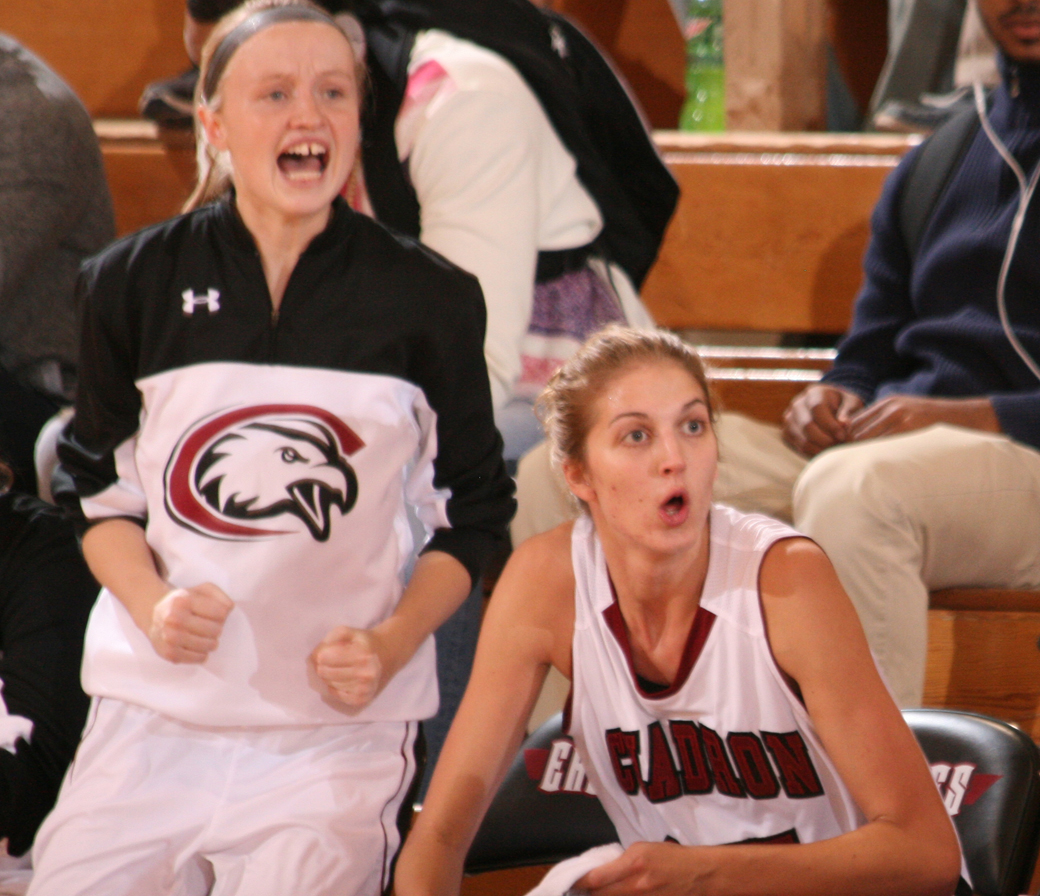
Leana Tajkov is who she is. That’s what traveling the world showed her.
“I wouldn’t trade the experiences, even the bad ones, for the world.”
The experiences have made the world her home. When she left Serbia, she abandoned part of her culture and picked up part of the American lifestyle. She is still the tall slender foreign girl with a strong accent, but in many ways she is different.
“I feel like I can try anything now. I am not fully Serbian anymore, but I am okay with that,” she said.
Her goal now is to make everywhere her comfort zone.
“I have grown a lot, but I still have much to learn.”
After 40,600 miles, Tajkov’s accent is a little different, and her clothing style has changed some. She uses respectful southern mannerisms, and she ends long conversations with her family saying, “I love you.” She even eats some different things, but Tajkov is still Tajkov. At the core of who she is, she hasn’t changed. Skin deep, cultural quirks may change each place she goes, but Tajkov remains the same resilient woman pursuing her dream called basketball.