
Where’s the baby?
“Have you ever noticed that when you’re going somewhere for the first time—somewhere you’ve never been —that it always takes longer to get there than it does to come back?” Little did I know that this simple and quite relatable statement set the mood for the mind journey I was about to begin. “The Play About the Baby” was brain antagonizing, confusing, and all around boggling without a single clue that it was doing such, until the end that is. The encouraged and unavoidable audience participation leaves you no choice but to insert yourself in the play at a deeper level than merely a spectator. It forces you, captivates you, intrigues you to put yourself in each one of the character’s place of mind.

The play has everything our generation craves—the drama, the manipulation, the audience participation, and the sex. Girl, played by Ashley Rushman, senior of Gurley, exploits an innocent rawness that fully overtakes the mind, body, and soul of her lover, Boy, played by Derek Phelps, junior of Sidney. The young couple’s connection radiates through the majority of the first half of the play and even after struggle, despair, and loss Boy maintains that intense level of love to Girl. Although she reciprocate that level of love, her spirit has been crushed and I have to admit she took me down with her. Girl’s initial rawness made her lovable, yet mysterious. From the moment of her character’s existence she had my full and absolute attention. As her emotions ranged across a wide spectrum of lust to anguish her captivation requires you to join in on the emotional roller-coaster of the play.
The roles of Man, played by Willis Miller, senior of Deer Trail, Colo., and Woman, played by Hannah Clark, junior of Littleton, Colo., couldn’t have been casted better. Their captivation feeds off one another at an advanced level. Man’s main partner is the audience. Man pushes, expecting full verbal communication from all members of the audience. There’s no escaping this, believe me I tried. The commitment to character by both Man and Woman is remarkable.
The character of Woman is executed seamlessly. The hilarious and nonsensical personality kept me on the edge of my seat wondering what she would do next. Her nonverbal communication almost out spoke her verbal communication throughout the play. Even when Woman was not speaking, I couldn’t help but to watch her because I didn’t want to miss out on her reaction.
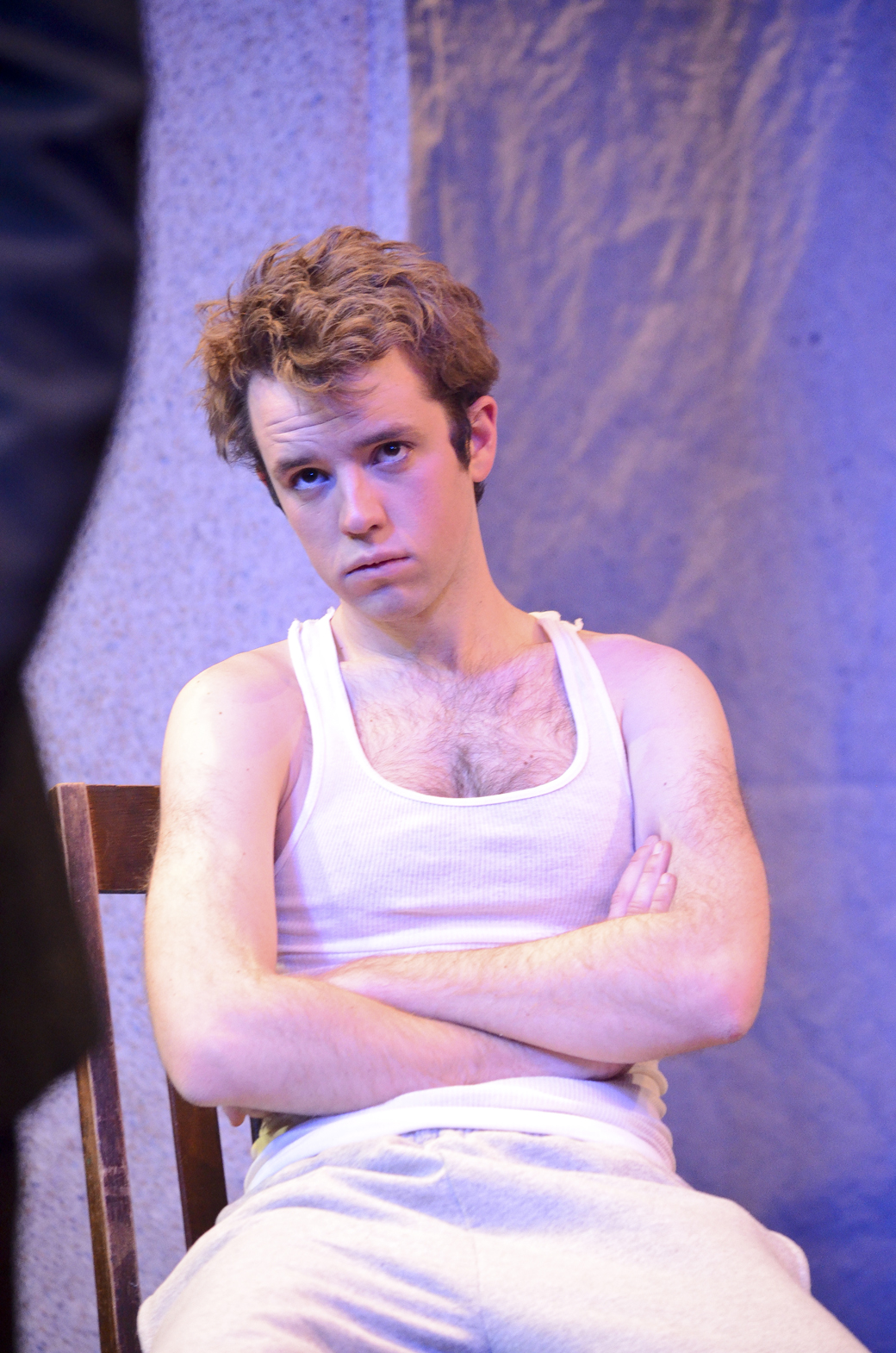
As much as I would love to review the content and conflict of the play—I will not. Not only because I’m still trying to figure it out
myself, but also because I don’t want to interfere on how this play will affect you. Each person will take away a different aspect of the play, whether it is a sad memory, or even just a comic relief—the play will impact you in a different way than the person sitting next to you, across from you, or behind you. It will make you think. How deep you let that thought go within yourself is up to you.
The overall commitment and level of excellence from the cast and crew is truly admirable.