
War coverage is still important
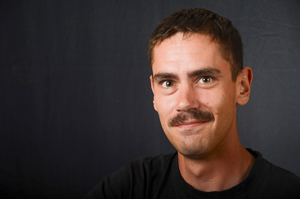 News that Islamic State militants beheaded former Stars and Stripes Photojournalist James Foley, broke late Tuesday. Foley had been on assignment as a freelance photographer covering the Syrian civil war when he disappeared in November 2012. According to the video released by militants, the killing is in retaliation to U.S. airs trikes on Islamic State targets in Iraq.
Foley’s death, while tragic and gruesome, has sparked my renewed interest in an important question: should journalists be allowed on the battlefield?
As a Veteran and journalist, I believe that the news media has an obligation to send reporters into combat zones and to provide coverage of the conflict.
The public has a need to know when a conflict is occurring. Fair and unbiased war coverage gives them insight and helps the public put political and social pressure on people in positions of power; this pressure, in-turn, forces the powered individual to act. While the video of Foley’s execution is disturbing, ignoring the “why” will do more harm than good.
War news is hard for anyone to stomach, and it’s even harder to sell to a weary and beleaguered public. However, after more than a decade of this nations involvement in numerous wars, it is still a highly relevant subject that needs to be discussed.
The larger philosophical imperative is that war carries huge repercussions for every person on this planet.
I hate to state the obvious, but war kills people: be they civilians, soldiers, or “the enemy.” The public needs to be made aware every time war breaks out. We can’t willingly ignore an uncomfortable truth just because it doesn’t sell newspapers or catch high ratings.
Which side is right and which side is wrong is not for the reporter to decide. Their job is to report on what happens. The problem I see is stems from our societal understanding; we have received a selective presentation of war through media, and there’s something missing.
The “T.V. war” that was Vietnam has made it’s mark in history as has having destroyed our nation’s will to fight. When the public had the opportunity to see that everything wasn’t as cut and dry as the WWII newsreels, they protested further involvement.
The public got an opportunity to see for the first time what so many Veterans know first hand: war is a violent and traumatic experience.
However, beginning with the Reagan administration, the White House and Pentagon recognized the potential for negative public reaction when people had the opportunity to witness war in that same context.
Politicians have since taken advantage of a dramatic change in philosophy for how they should manage military public affairs during a war.
Press black-outs began during 1983’s Operation Urgent Fury in Grenada, and the influence carried on through the rise of “embedded journalists” during the first Iraq War in 1990.
Military Public Affairs’ relationship with the press has ensured that only “credentialed” reporters are allowed access to witness and document wars. So what does this all mean?
In order to maintain public support for war, you have to change and control how the public perceives it.
If you watch the news today, more than likely you’ll only see brief stock footage with the majority of the newscast consisting of top-down 3D maps and an occasional edited drone strike.
It’s sterile and clean, so that the public can stay detached from the conflict. The blood-and-guts reality is filtered out, and I find this troubling because it serves a disservice to not only the public interest, but also alienates those who witness war firsthand.
Foley’s death should not be seen as a reason to limit reporters access to combat zones, nor should his death be seen as a rally-cry for a particular political purpose. His death is real; a reality that underscores the need for reporters.