

Local children enlightened by Science Days at CSC
Science enthused third, fourth and fifth grade students excitingly entered the Math and Science building early Saturday morning. They enjoyed a day with CSC science and education majors as they learned about sending rovers to Mars. They plan to explore a simulated Mars landscape and even tiny Martians, with hopes that their rover will complete the mission. The elementary school students would get the opportunity to video chat with Greg Peters, NASA’s Jet Propulsion Laboratory Research Staff of Pasadena, California. They were anxious to get a further understanding of the rover building process in order to construct one later in the day. It was during this session with Peters that the students were able to ask questions related to his work and gain knowledge of the rover missions.
“I have had the opportunity to work on three different teams of rovers,” Peters said when asked what his favorite project was to work on. “My favorite so far is the Mars Science Laboratory but after the Mars 2020 is complete I believe that will be my new favorite project.”
The students also learned the most important parts of a rover; the wheels and motor, it takes multiple types of engineers to complete these important parts. Also, it takes nine months for a rover to travel to Mars from Earth. The Science Day attendees also got an inside look into the Mars Helicopter and the future of Mars 2020.
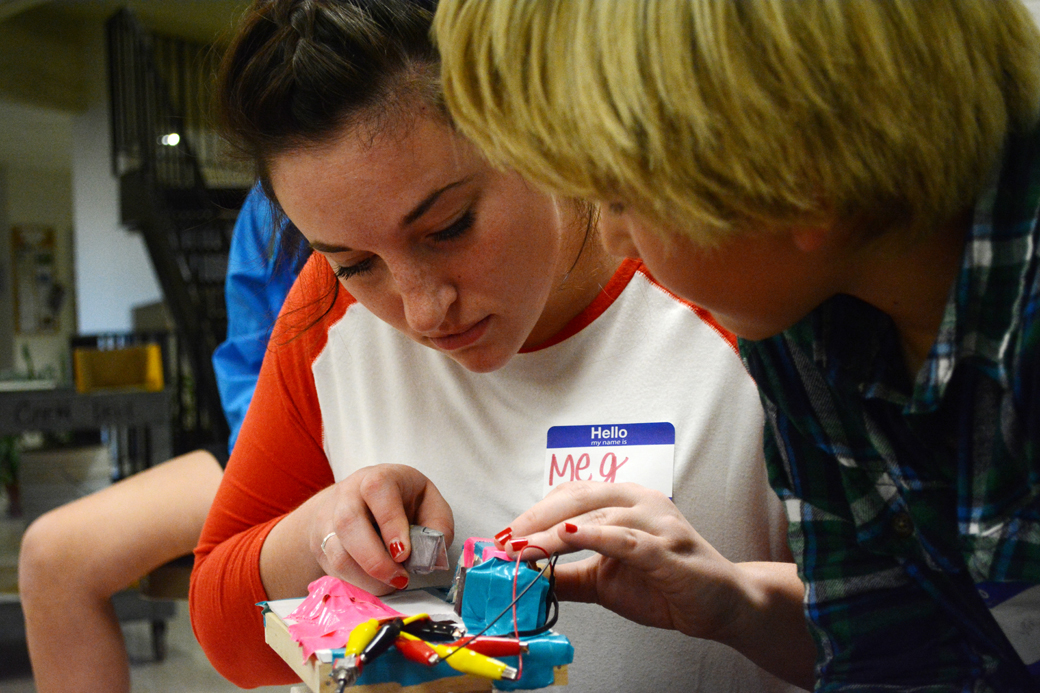
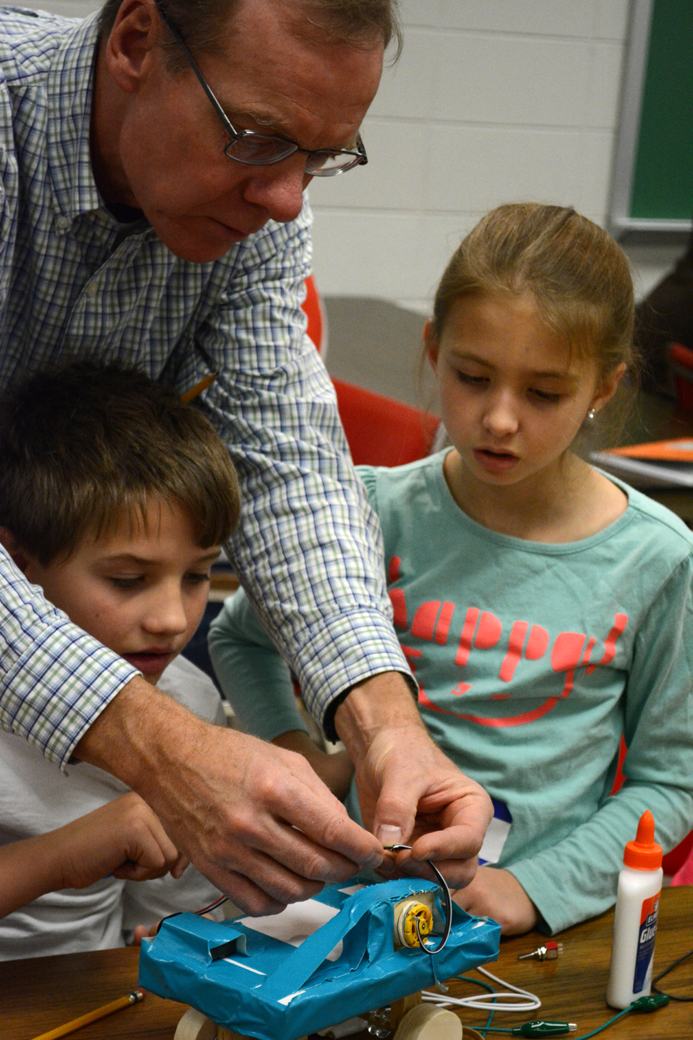
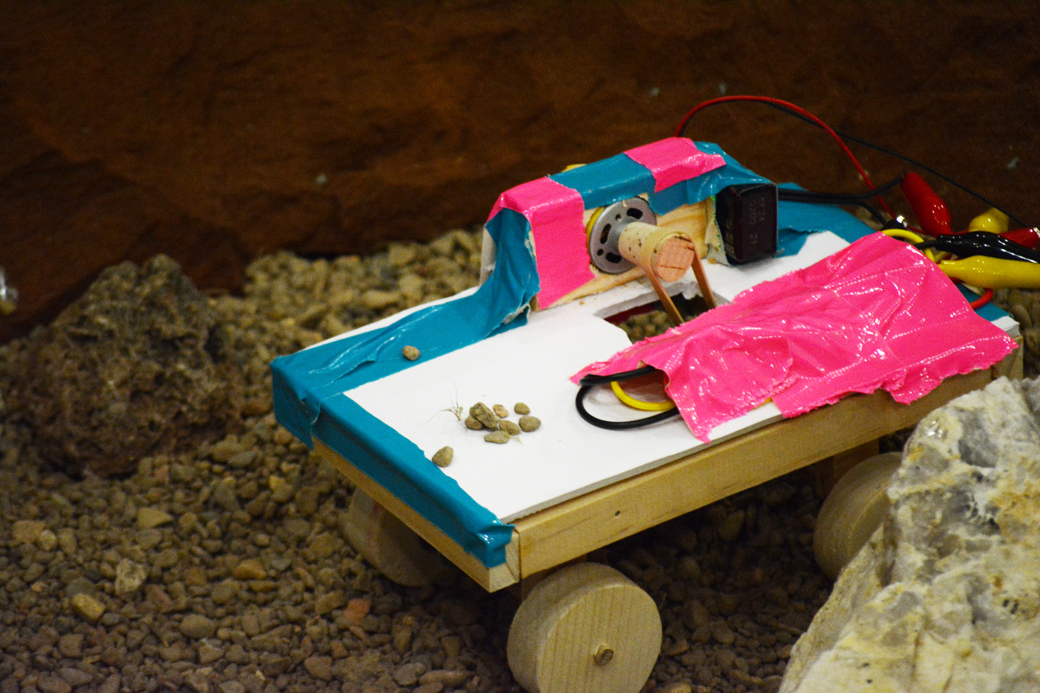
The young rover specialists for the day, then divided into groups to create their own rover. Once the base of the rover was complete, they attached the wheels to the axel and glued the motor on top.
They tested the battery and motor to ensure functionality. A rubber band was needed to connect the wheel axel to the motor which created movement. Lastly, a circuit of electricity needed to be created by connecting the switch, motor and battery for a hands-free moving rover.
Once the rovers were built, it was time to take them to Mars and put them to work collecting samples. The Mars landscape consisted of big rocks, gravel, and tiny Martians.
The objective was to explore Mars without hitting a large rock which would cause damage or destroy the rover.
“I didn’t think our mission was a success,” fifth grader McKinley Fuller, of Chadron, said. “If we studied the terrain before, we would have been able to build the rover more durable for it to get around the rocks.”
After hours of learning, building, and testing rovers, Science Days came to an end leaving the students excited and with an interest in science. CSC Science Professor Ann Buchmann said she enjoys bringing these hands-on and unique activities to young students, which they would not be able to experience in their classrooms.
The next Science Days is planned for 8:30 a.m., Saturday, at the Math and Science Building.