
CSC honors MLK
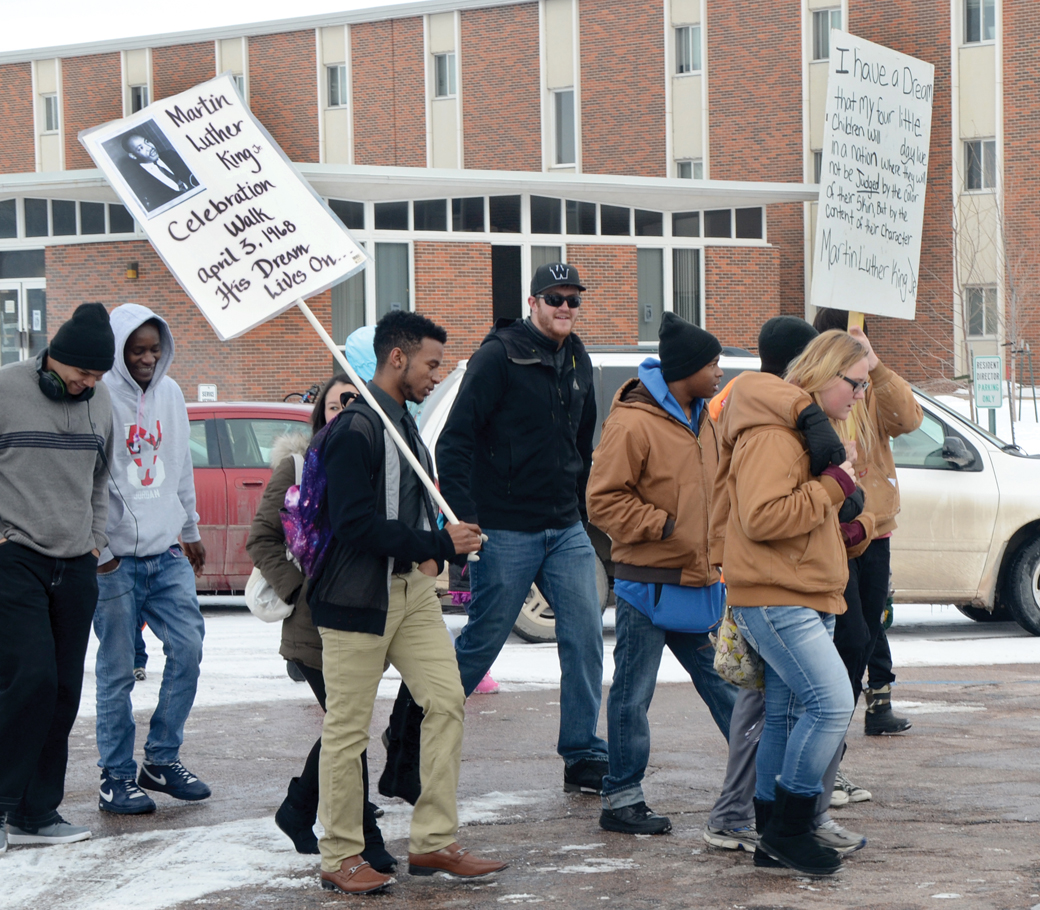
Martin Luther King Jr. Day is an American federal holiday celebrated on the third Monday of January every year. King was assassinated on April 4, 1968, and the holiday was first observed in 1986, but was officially observed in all 50 states in 2000.
In honor and celebration of MLK Day, five 50-minute panels were presented in the Student Center Ballroom on various topics.
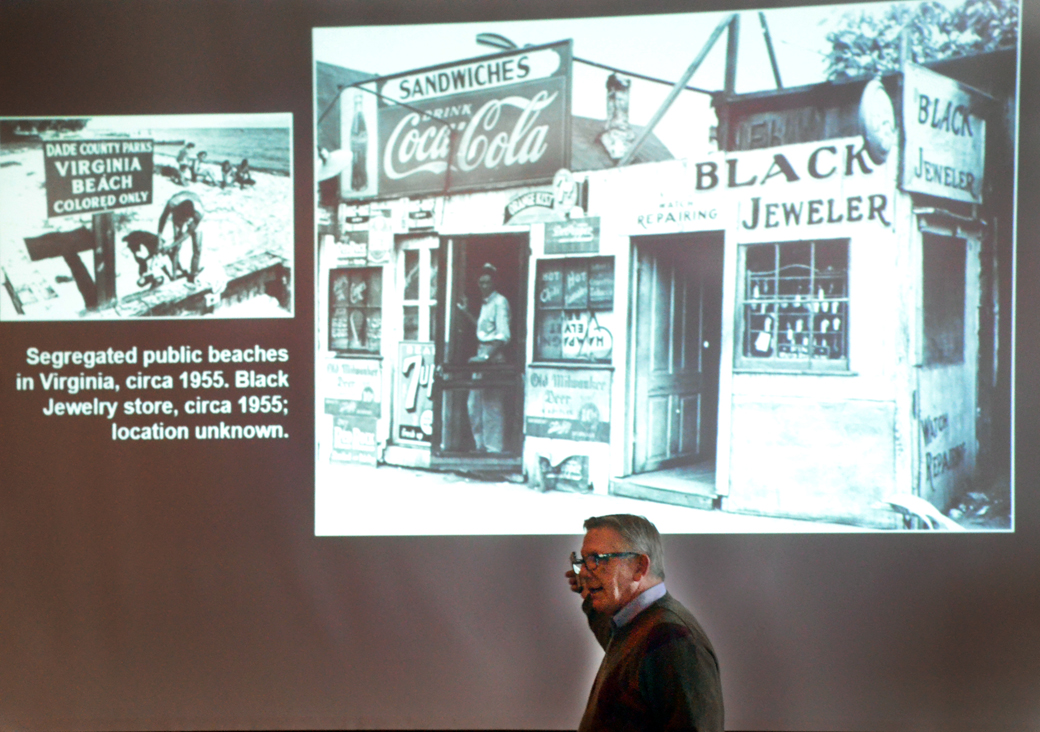
Michael Kennedy, social and communications art instructor, who teaches a photojournalism class was the first presenter. His presentation, titled Photojournalism and Civil Rights, showed students how the Civil Rights Movement in the United States was documented through pictures. Students were shown photos from different parts of the movement, some containing graphic images.
“These images should make you angry,” Kennedy said. “They made me angry when I was putting this (presentation) together.”
Kennedy showed a variety of images that depicted the injustices that African Americans in the United States suffered.
A group of 40 college students and faculty joined a panel of nine students from HIST/SS Seminar in Social Sciences to discuss segregation within schools during the second panel of the day.
Segregation remains a fact in most schools nationwide.
“We wanted to raise awareness to the campus that even though Brown v. Board of Education occurred, segregation is still happening in schools and the community around us,” Mackenzie Carroll, 22, junior of Sacramento, California, said.
Economic segregation was the most frequently discussed topic. Although many students did not see this as a problem in their hometowns, studies revealed that people would rather hang out with other people in their same economic class.
Anthropology studies on school segregation revealed results that determined diversity is getting skipped over in classrooms causing segregation in their daily lives.
“Teachers play a significant role in our lives therefore, they need to recognize and bring awareness to segregation in the classroom to help student adapt to the people around them,” Carroll said.
Positive learning traits came from learning in a more diverse classroom a study showed. Better critical thinking skills and self-worth, as well as a reduction in fear and loneliness, were results of this study.
Even though segregation is not as apparent to many of us in our day-to-day lives, it still exists. Many colleges segregate their population to one specific ethnicity while economic segregation separate us based on class.
The third panel featured “Selma: The Bridge to The Ballot,” which was a documentary about the struggles of black people to obtain the right to vote in Alabama. High school students were forming groups to protest in place of their parents, so their parents didn’t have to risk losing their jobs. Students were skipping school to participate in protests and marches. After awhile of being beaten and mistreated, King planned a march from Selma to Montgomery. On March 7, 1965, a group of 600 people set off to march. When they reached Edmund Pettis Bridge the state troopers were waiting for them with tear gas and nightsticks. They beat the group of protesters on TV, which was later called “Bloody Sunday.”
On March 21, King tried the march again, this time with the support of nearly 50,000 people black and white. On March 25, they walked into Montgomery after walking for 12 hours per day.
After this event President Lyndon Johnson gave African Americans the right to vote in all states, not just Alabama.
In the fourth panel, Jovan Mays, CSC alum, used his poetry during his presentation to give students a chance to think about what they are doing to carry on King’s legacy.
Mays said, “Often times, we tend to default to silence as communities” and ignore the fact that King was “targeted” and that King’s assassinator stole his voice.
“A big part of why we try to celebrate this day is to make sure that that voice isn’t completely stolen,” he said.
Mays told students of situations where he encountered racism and how at first he wouldn’t stand up for himself but throughout the years, as he learned the power of the human voice, he began to speak his opinion and stand up for himself and others. He said that sharing your opinions could make you vulnerable so many people are afraid to stand up. King stood up and made himself vulnerable by doing this but he changed so many lives by sharing his opinion.
The first poem Mays read he wrote as a sophomore at CSC. This poem made students visualize all the horrific things that were happening around King during his time on earth and then repeatedly asked how King could have a dream with his given situation.
Mays asked students what they would have done on Monday if CSC didn’t have school to celebrate MLK Day.
“I’m just as guilty as anybody else, I would have likely watched that football game last night,” Mays said. “I would’ve woken up extremely late today, and maybe not have walked my way through consideration of what it means to celebrate this day.”
He said students should think about what they can do to help carry on King’s legacy.
The last session of the day was a presentation by music professor G. W. Sandy Schaefer about music and how African American culture became driving force in the industry. Schaefer teaches a course called African American Popular Music, 1619-1980. His presentation, “Music and the Struggle for Equality,” described both the triumphs and the struggles that African American performers dealt with before and during the Civil Rights Movement. Performers like Miles Davis, a renown trumpet player, and even Louie Armstrong, a famous African American performer, found themselves facing problems because the country was going through such a turbulent time. Schaefer also played sound bites from certain performers to give the audience an idea of the kind of music that was being made by African American performers in the early to mid 19th century.
Following the annual march from the corner of Main and Third streets to the college, a program in the Chicoine Events Center pulled together college students, members of the community, and elementary students to celebrate the life and dream of King.
David Nesheim, associate professor of social and communication arts, welcomed the crowd and gave a brief history of MLK and introduced the guest speaker, Albert Bimper. Bimper is an assistant professor of ethnic studies at Colorado State University and senior associate athletic director for diversity and inclusion. Also a former athlete, Bimper was a member of the 2006 Super Bowl Champion Indianapolis Colts.

Bimper was a student athlete at CSU, earned a master’s degree at Purdue University, and later received his Ph.D. from the University of Texas in Curriculum and Instruction with a focus on Cultural Studies in Education.
Bimper spoke to the crowd about King’s dream and stressed the importance of it. He also challenged everybody to be an uncommon individual, something that he learned from former Indianapolis Colts Head Coach Tony Dungy.
Bimper said that one of the most important things about educating youth about the civil rights movement comes down to knowing the history that they are a part of.
“We are all a part of that history,” Bimper said. “We all, to some degree, have some connection to it. It has created who we are as a country and created opportunities for them to hear speeches about it.
“Understanding your history gives you a lot of foundation for you to feel proud about who you are and answer questions about ‘What’s my next step?’”
Bimper also said that the best thing that the new generation can do is to not lose sight of community and use technology to connect with others and build a stronger community.
“Sometimes we don’t know our neighbors because we are locked in our own world,” Bimper said. “Use the technology to connect us to the world and open up doors to communities that we may not walk over to, but now have access too. I think this generation will find unique ways to use technology to really build community in a new way.”