

Speaker provides fresh perspective
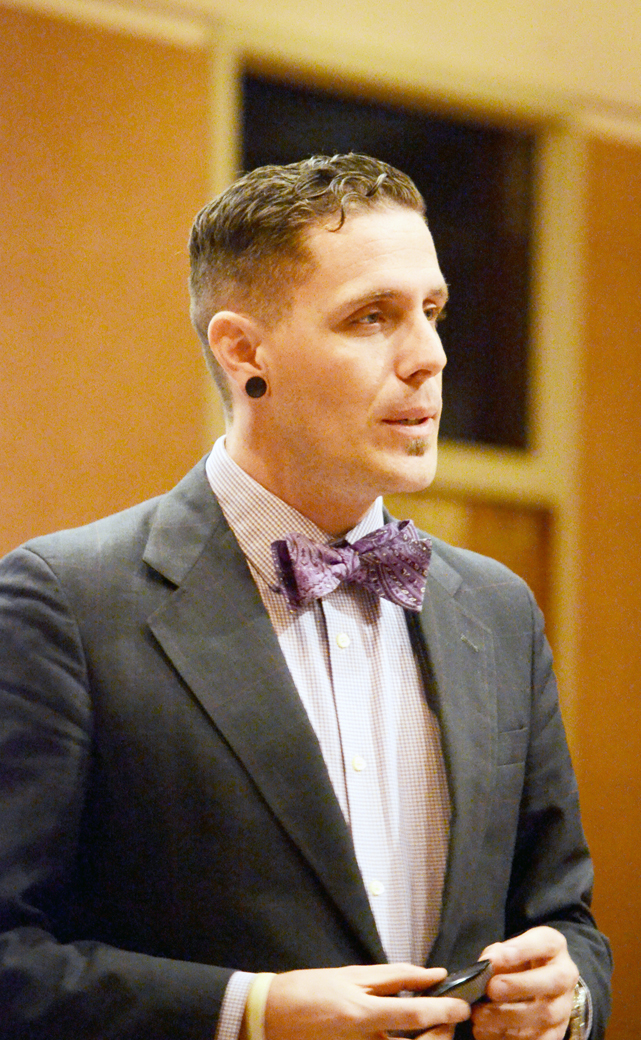
RLA, Student Senate, and CSC’s diversity committee sponsored Jamie Utt, a sexual violence prevention activist, to talk with students about ways to reduce sexual violence.
CSC students learned about “sex-positive party culture” 7 p.m. Thursday in the Student Center Ballroom.
Utt is working toward his doctorate at The University of Arizona, Tucson, but has been giving these presentations to middle school, high school, and college students for 13 years. He also volunteered for four years as a sexual assault survivor’s advocate. He said he started his advocacy because he was driven to “help solve the problems in society.”
After having the audience describe their version of a perfect day, Utt emphasized the differences between what parties are like in reality versus what the media makes them look like.
Utt did not drink alcohol until he was 25 due to a history of alcoholism in his family.
“For a very long time I had a fear of alcohol, a fear of the substance,” he said.
He explained that partying is a gateway to sexual violence. People’s values can stray when they are under the influence of drugs or alcohol. Someone who did not set out to harm anyone, may end up assaulting someone due to intoxication.
Utt’s research has found that there are easy changes to the party environment that can reduce the chance of sexual violence occurring. Slowing the drinking pace, brighter lighting, and turning down the music can all encourage conversation, and discourage predators from assaulting someone.
Another big problem that inhibits sexual violence, Utt said, is the terms or phrases we use in everyday conversation. He likes the term “sex-positive” rather than rape culture. He explained that prevention works better when we tell people what we want them to do, rather than threatening them not to do something.
Jokes about rape also tend to trivialize the issue. Speaking about sexual violence in a casual way makes it seem insignificant.
He then asked the audience to think back to the perfect party they described earlier, and brainstorm ways to make it a sex-positive event. One solution students came up with was color-coded wristbands that determined whether a person was taken, available, or looking for a relationship.
Utt ended his seminar with a call to action for the students.
“It is your challenge,” he said, “to spread awareness to reduce sexual violence on your campus.”
Friday morning, Utt also spoke about diversity in a presentation titled, “The Wall: Diversity and Inclusion Consulting and Sexual Violence Prevention.” The presentation was set up more like a workshop for the 12 students in attendance.
He began by describing the concept of “The Wall” that he learned from a presentation that he attended when he was younger. Then he had everyone in the room go to a paper that was taped to the wall in the Student Center Ballroom with a certain stereotype written on it and told the attendees to write all the first things that came to their minds when they thought of each stereotype.
After each attendee had written for a minute at each piece of paper, Utt brought to attention the negative things that people unintentionally thought of when they thought of certain groups of people. Utt finished by giving tips of how to avoid these negative thoughts.