

When disaster strikes
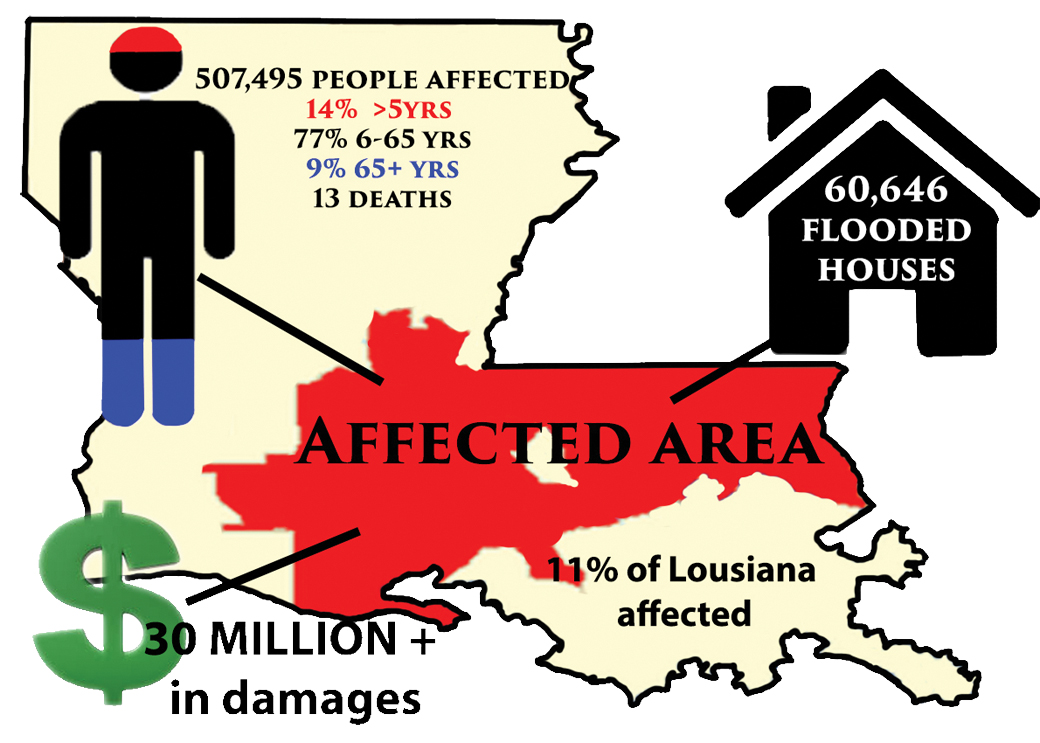
Hurricane Sandy in 2012 was the largest natural disaster to hit the United States, until recently. Mid-August more than 2 feet of rainfall resulted in devastating flooding in southern Louisiana. President Barack Obama declared the 20 affected parishes as major natural disaster zones.
Gov. John Bel Edwards of Louisiana reports 13 deaths and at least 507,495 people affected by the flood, as of Aug. 22. Affected people includes individuals stranded in their vehicles during the flood, people who lost property, and those unable to go to work or school due to flood waters. The U.S. Coast Guard, National Guard, and volunteers referred to as the Cajun Navy have rescued more than 30,000 people. After responding to emergency calls, rescue workers redouble efforts by returning to devastated areas. Rescue teams are ensuring resident safety by going through all houses to ensure individuals unable to call for help were not left behind.
Louisiana is not unaccustomed to natural disasters; however, the parishes affected by the flooding are considered to be on high ground. Due to the fact of being considered high ground those parishes did not qualify for flood insurance. Many flooded areas broke historic water level records. The National Weather Service had predicted risk high flooding but a large portion of the population was caught off guard by the more than 2 feet of water.
“Nobody, I think, was prepared for that much rain in that short of a time,” Federal Emergency Management Agency chair Fugate stated in an interview with the National Public Radio.
Declaration of a natural disaster zone enabled federal funding application for damages to the people of affected parishes. After the declaration, FEMA approved $205 million for financial support of flood survivors. Post disaster responses from FEMA, the American Red Cross, and various government agencies are currently being conducted. According to live updates from the White House, FEMA has provided more than 2,400 ground support workers for distribution of water, food, emergency response communication, home clean-up operations, and other tasks. The American Red Cross has established 18 community shelters providing approximately 2,500 beds for displaced survivors. Meals, clean water, and 126,000 relief items also are being provided by the Red Cross. To ensure clean water supplies, EPA and Louisiana Department of Environmental Quality are currently testing water systems for contamination. Bridges and roads are being repaired by a $2 million of emergency relief fund from the U.S. Department of Transportation. Survivors’ health needs are being attended to by the U.S. DHHS. Flood survivors without health insurance will have medical equipment and medications provided by the for 30 days to ensure proper coverage.
Southern Louisiana will require countless hours of restoration and funds before the devastation from the flood is remedied. Relief can come from across the nation through various donations and volunteer groups. The United Way organization in Tangipahoa Regional Office is accepting mailed donations such as bleach, cleaning supplies, diapers, pet supplies and various items. Several organization such as the American Red Cross, the United Way, Companion Animal Alliance, and others are accepting online monetary donations. The Times-Picayune newspaper has a comprehensive list on their website listed in the article “Here’s how to help Louisiana flood victims.”